MACBETH publishes specification for multi-point megawatt charging stations
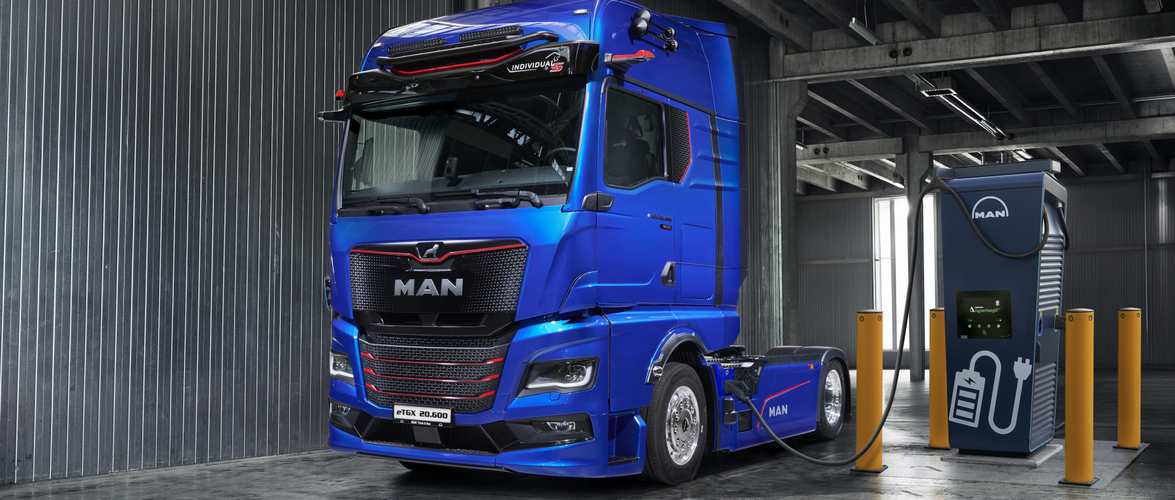
The EU-funded MACBETH project has published D4.1, a design specification for multi-point Megawatt Charging System (MCS) stations for electric trucks, written by CharIN and Finland's VTT and released on Nov 12. Standards for the MCS connector, supply equipment and communication for a single charging point were published between months 1 and 8 this year. The new specification goes further, covering site layout and power allocation when a station has several charging points. At the pilot stations, total output is lower than the sum of the charging points' rated power, and there is currently no common standard for allocating power when several vehicles charge at once.
Layout and electrical architecture
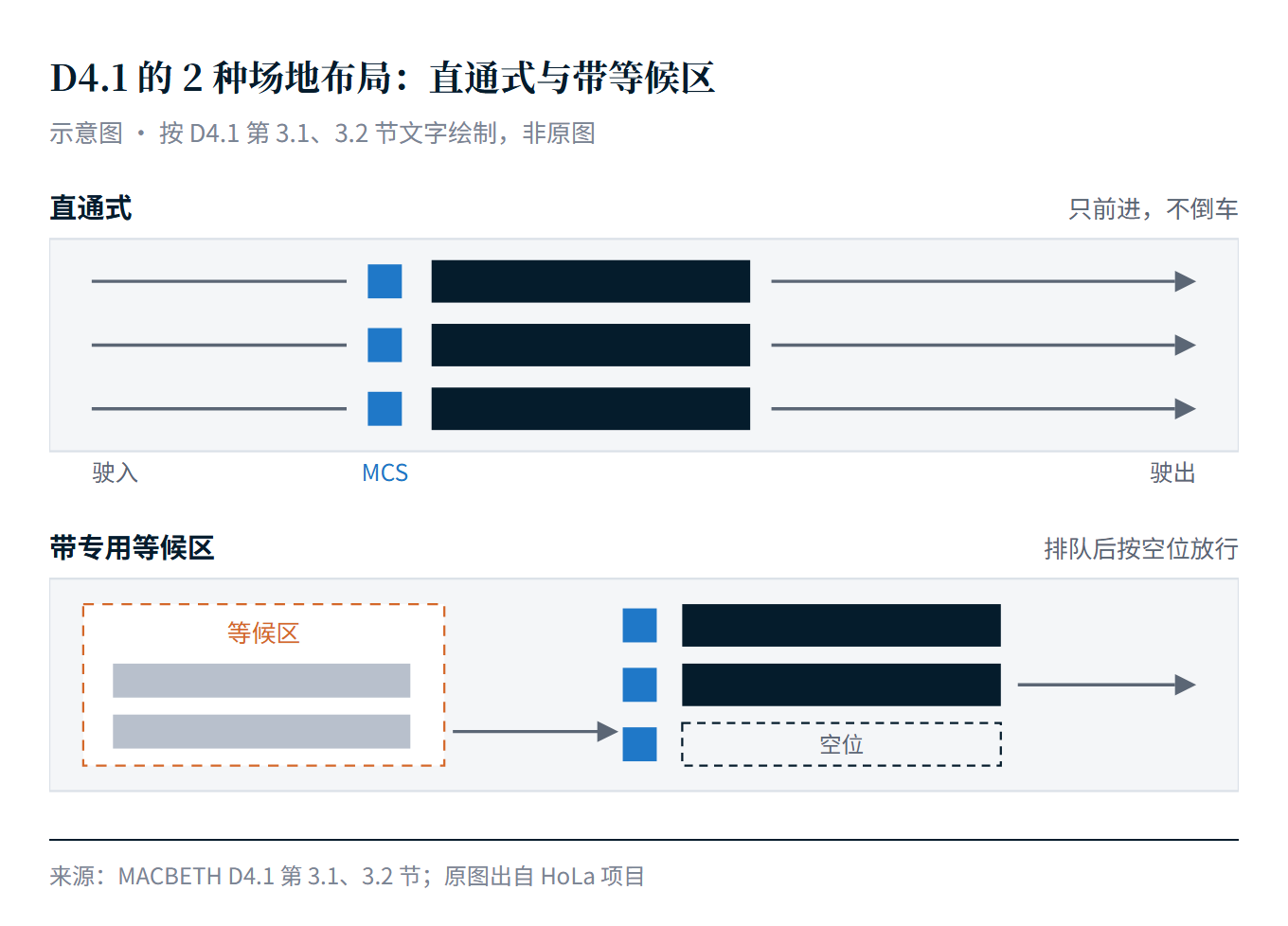
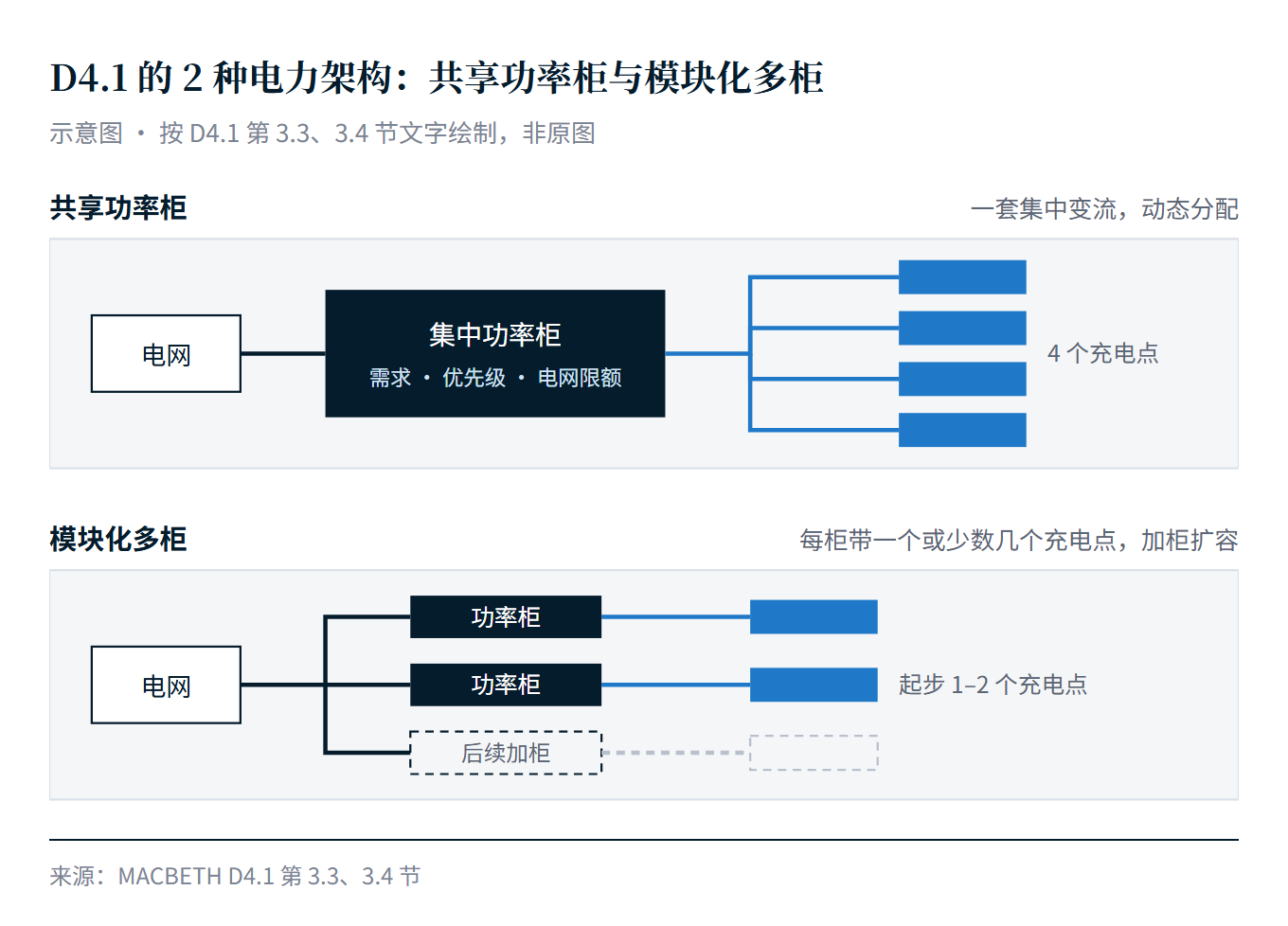
D4.1 sets out two site layouts: a drive-through layout that requires only forward driving, with no reversing, and a layout with a waiting area that adds a queuing buffer. There are also two power architectures: shared power cabinets use a single set of centralised conversion equipment that allocates power dynamically according to demand, priority and grid limits; in the modular multi-cabinet design, each cabinet connects to one or a few charge points, and capacity is expanded by adding cabinets.
Technical requirements include charger availability above 97%, measured continuously over the full year, allowing each connector at most about 263 hours of downtime. If operators write such metrics into procurement contracts, equipment suppliers will have to commit to availability on delivery.
Pilot power configuration
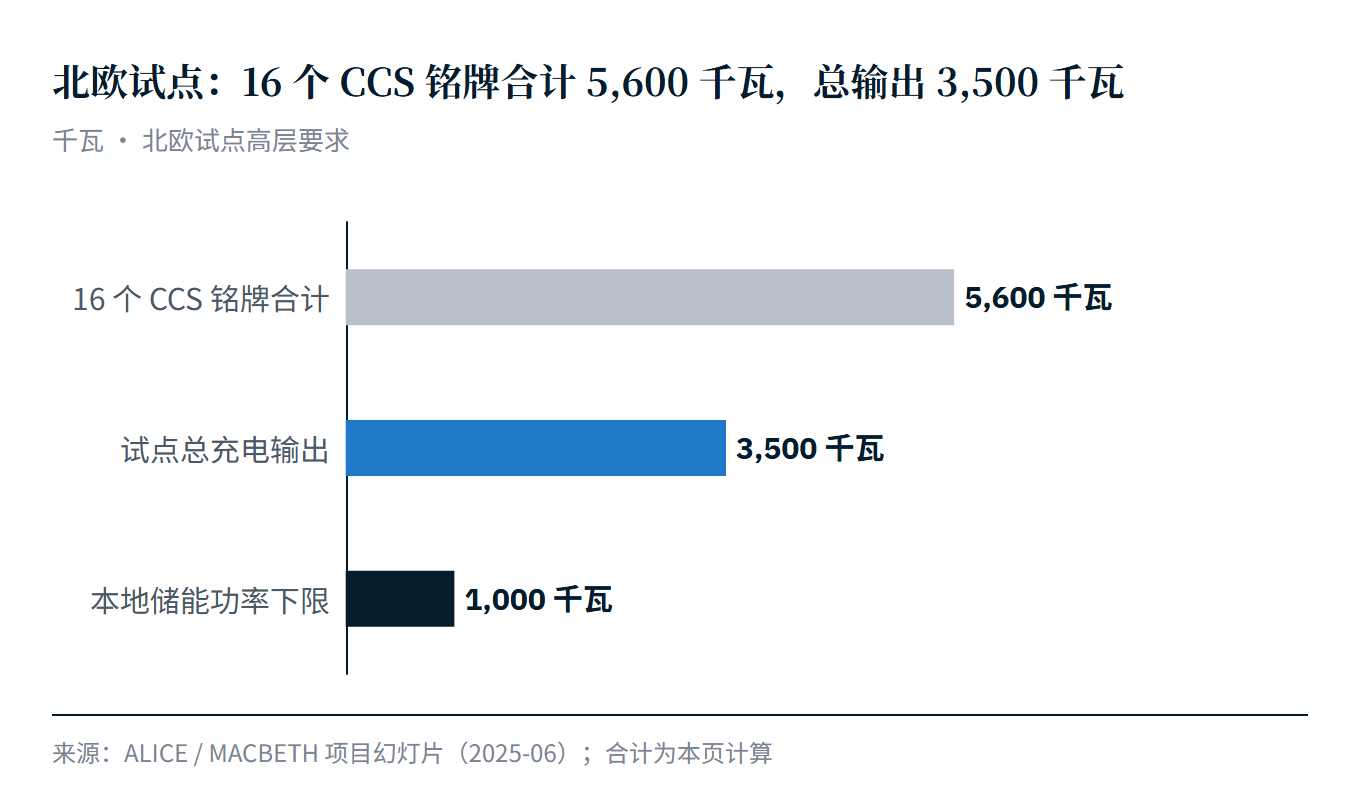
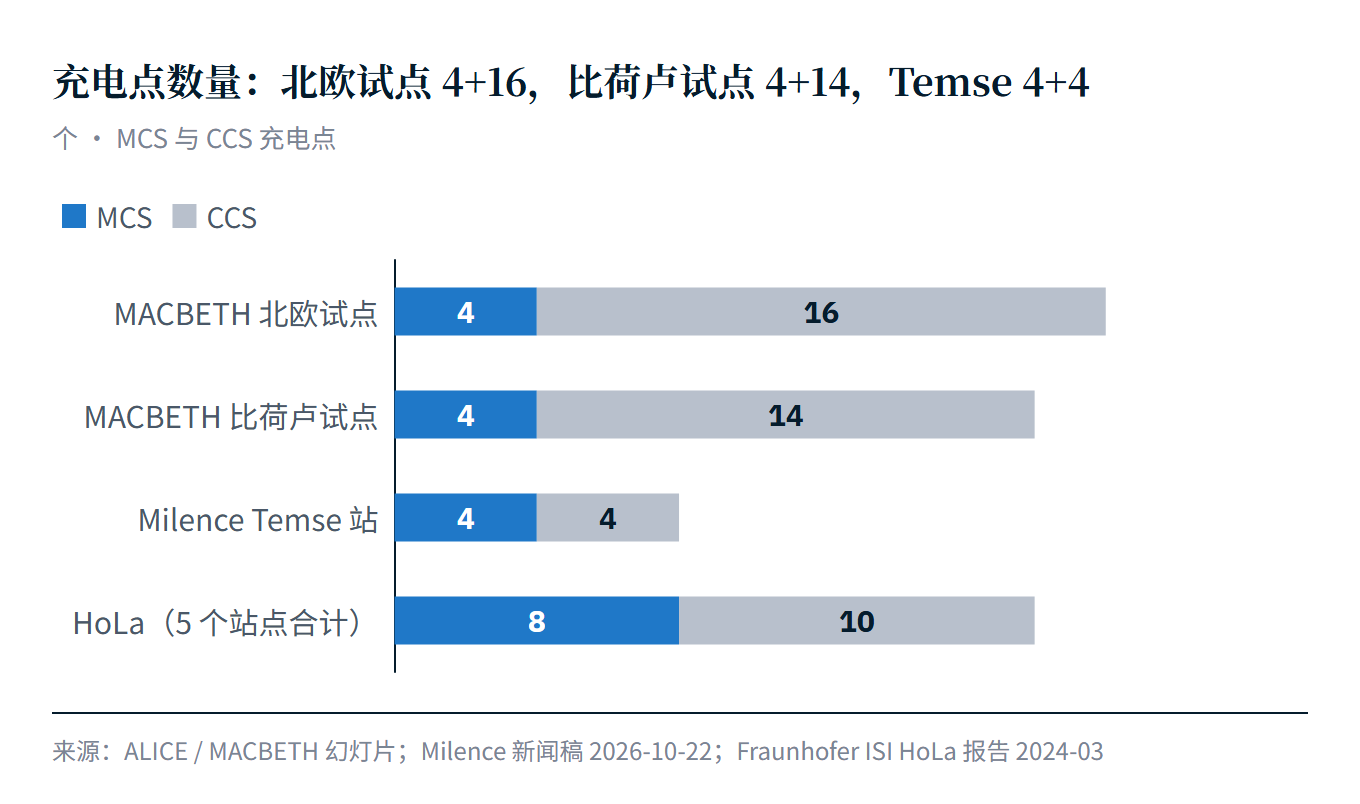
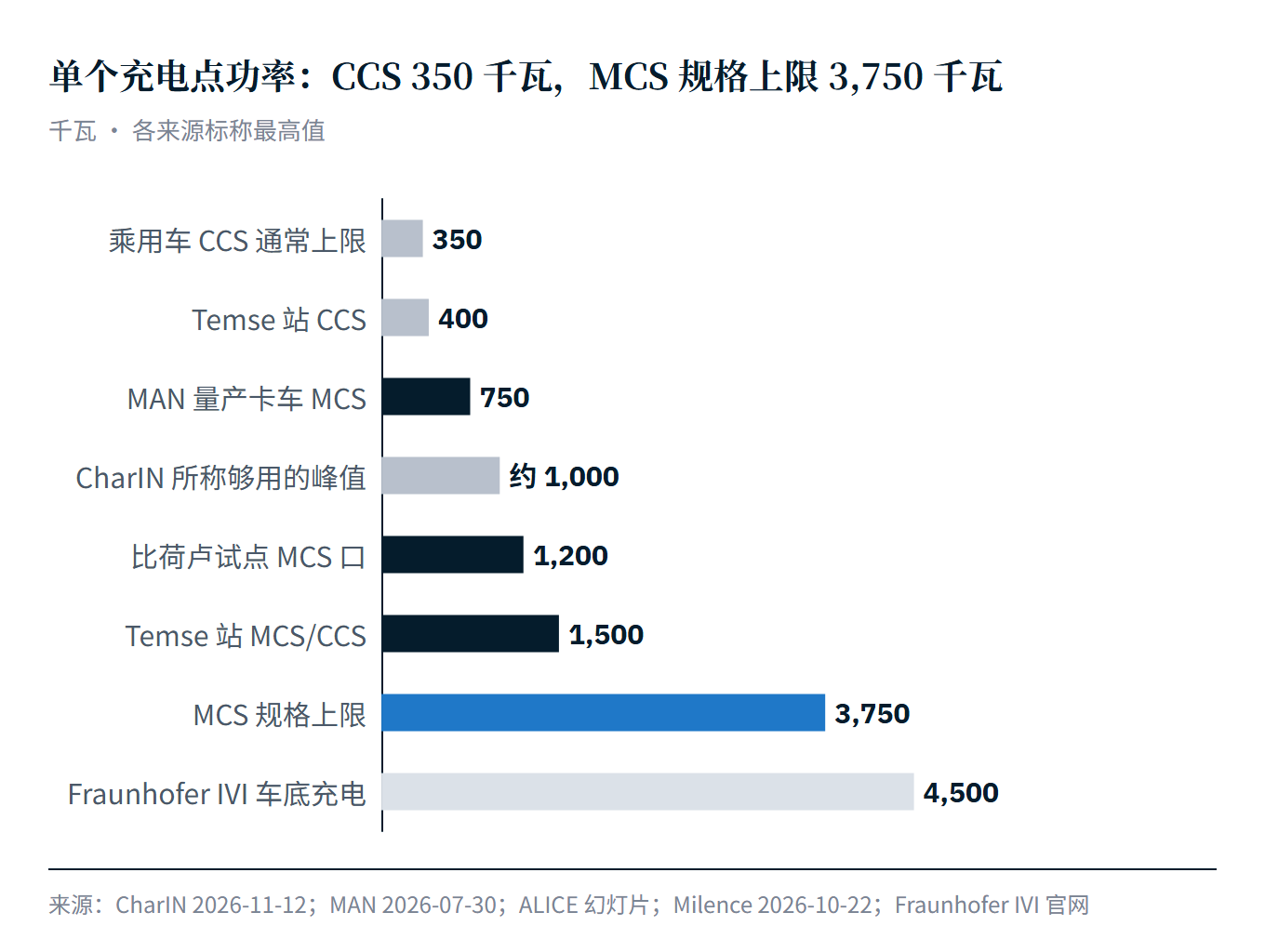
The Nordic pilot involving Kempower has 4 MCS charging points and 16 CCS charging points at 350 kW, with a total output of 3500 kW, plus at least 1 MW/1 MWh of energy storage. The 16 CCS points have a combined nameplate power of 5600 kW, so total output is only about 60% of that figure. The Benelux pilot is led by Milence; its 2025 plan calls for at least 4 MCS and 14 CCS points, with up to 1.2 MW per MCS connector.
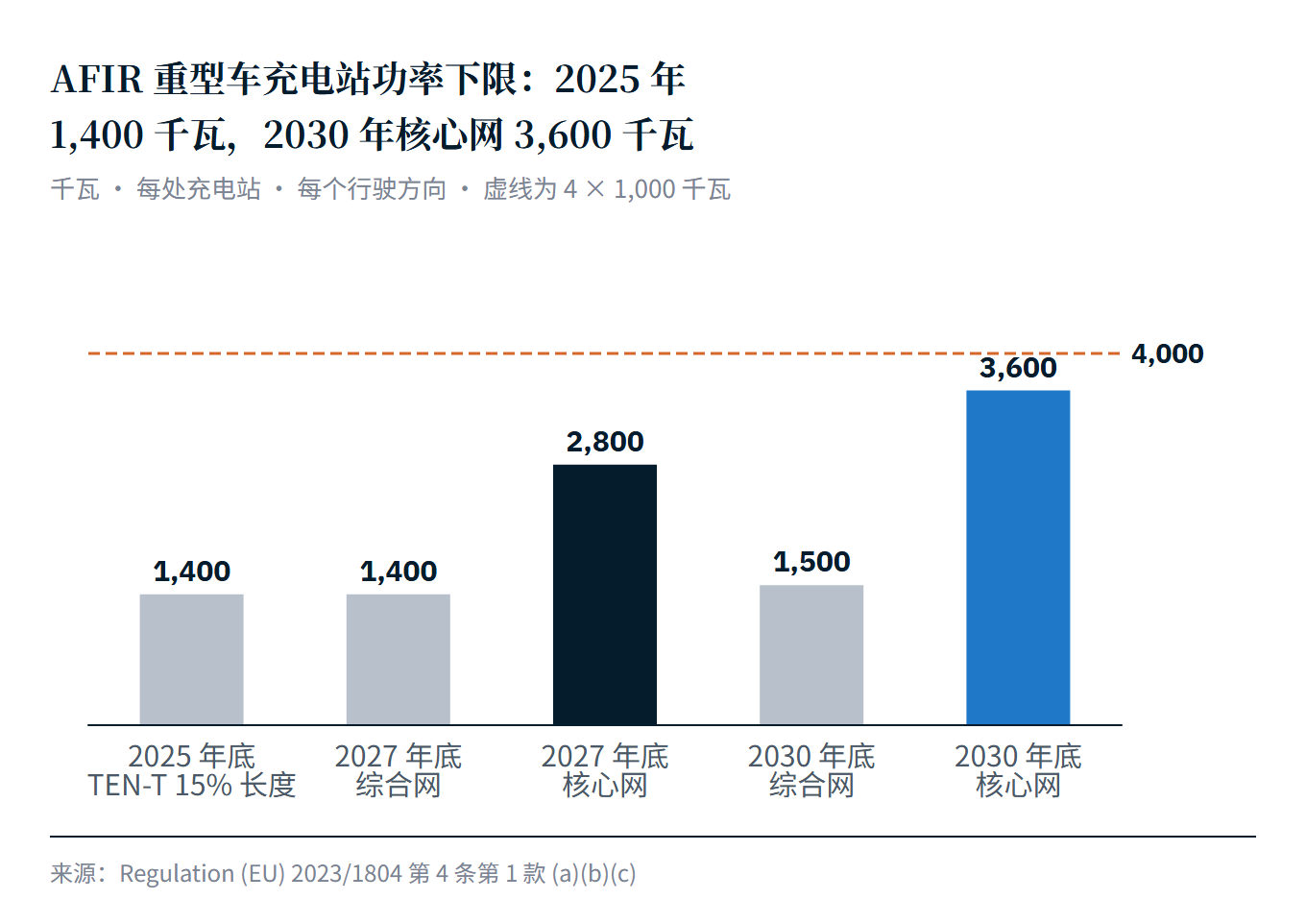
MAN's first series-production MCS trucks, which rolled off the line in 7, have a maximum charging power of 750 kW; charging 4 trucks simultaneously requires 3000 kW. The EU Alternative Fuels Infrastructure Regulation (AFIR) requires a heavy-duty charging station every 60 km on the core network by end-2030, each with at least 3600 kW, a minimum that is not enough for 4 1 MW connectors to charge at full power simultaneously.
When total output is lower than the combined power of all connectors, whether vehicles can charge enough during the 45-minute mandatory break depends mainly on power management and energy storage. This is where the differences between suppliers' solutions show.
Four gaps in standards
D4.1 reviewed more than 40 standards and identified four areas not yet adequately covered: power sharing and arbitration when multiple MCS chargers operate simultaneously, automated plug-in, guidance for mixed CCS/MCS sites, and site-level cumulative noise and waste heat.
For automated plug-in, the Benelux pilot plans to use Rocsys robotic arms; Germany's Fraunhofer IVI solution raises the charging connector from the ground to connect to the vehicle underbody, rated at up to 4.5 MW for trucks.
Until a standard is in place, each company uses its own solution for power arbitration.
In the first three quarters of this year, EU registrations of heavy trucks of 16 tonnes and above totaled 205857 units, of which 5120 were rechargeable models (BEV and PHEV), about 2.5%. Chinese charging equipment and energy storage companies seeking to offer complete site solutions for European heavy trucks need measured data under power-limited conditions, including energy delivered, availability and operating records across multiple vehicle models.
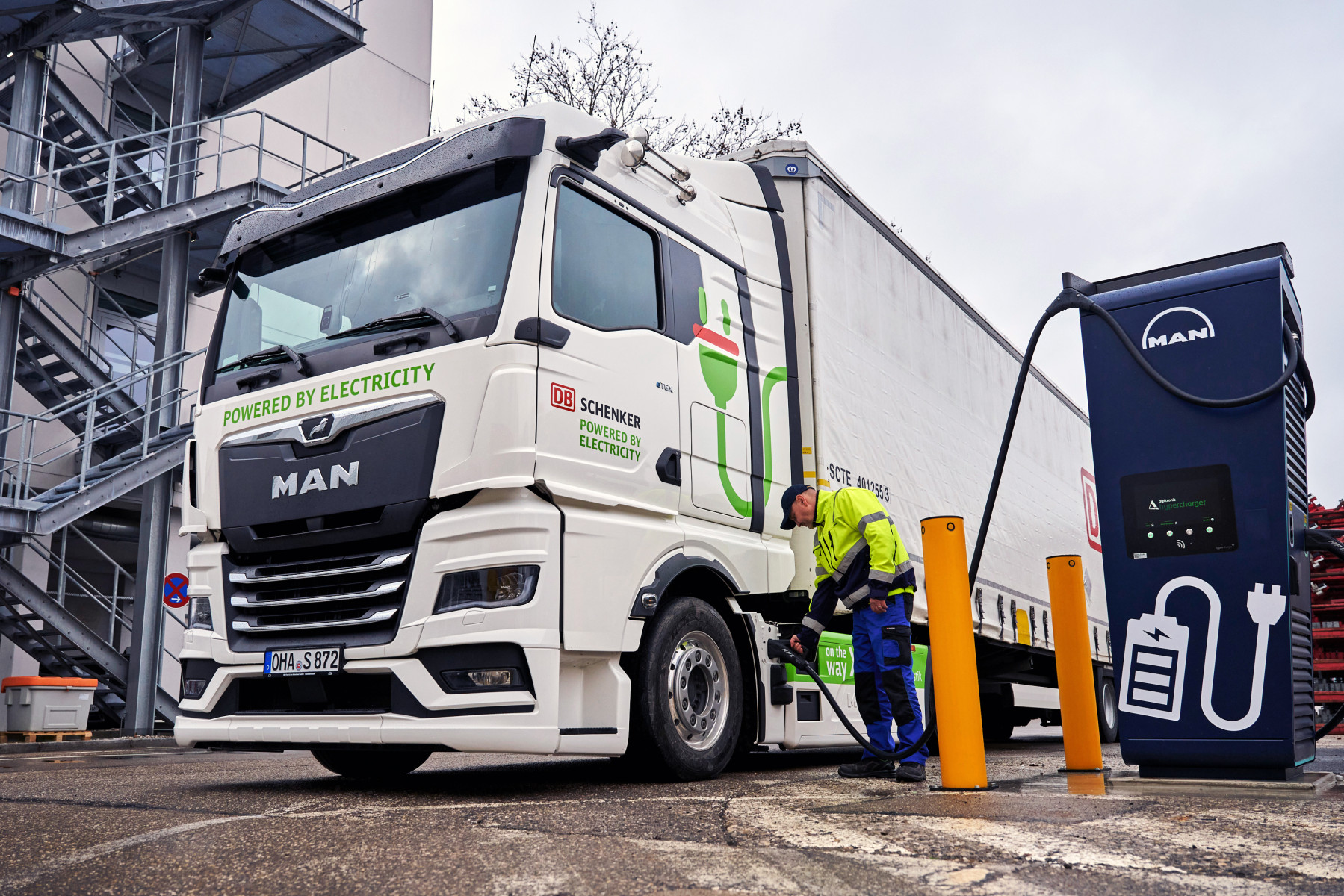
Image source: MAN Truck & Bus.
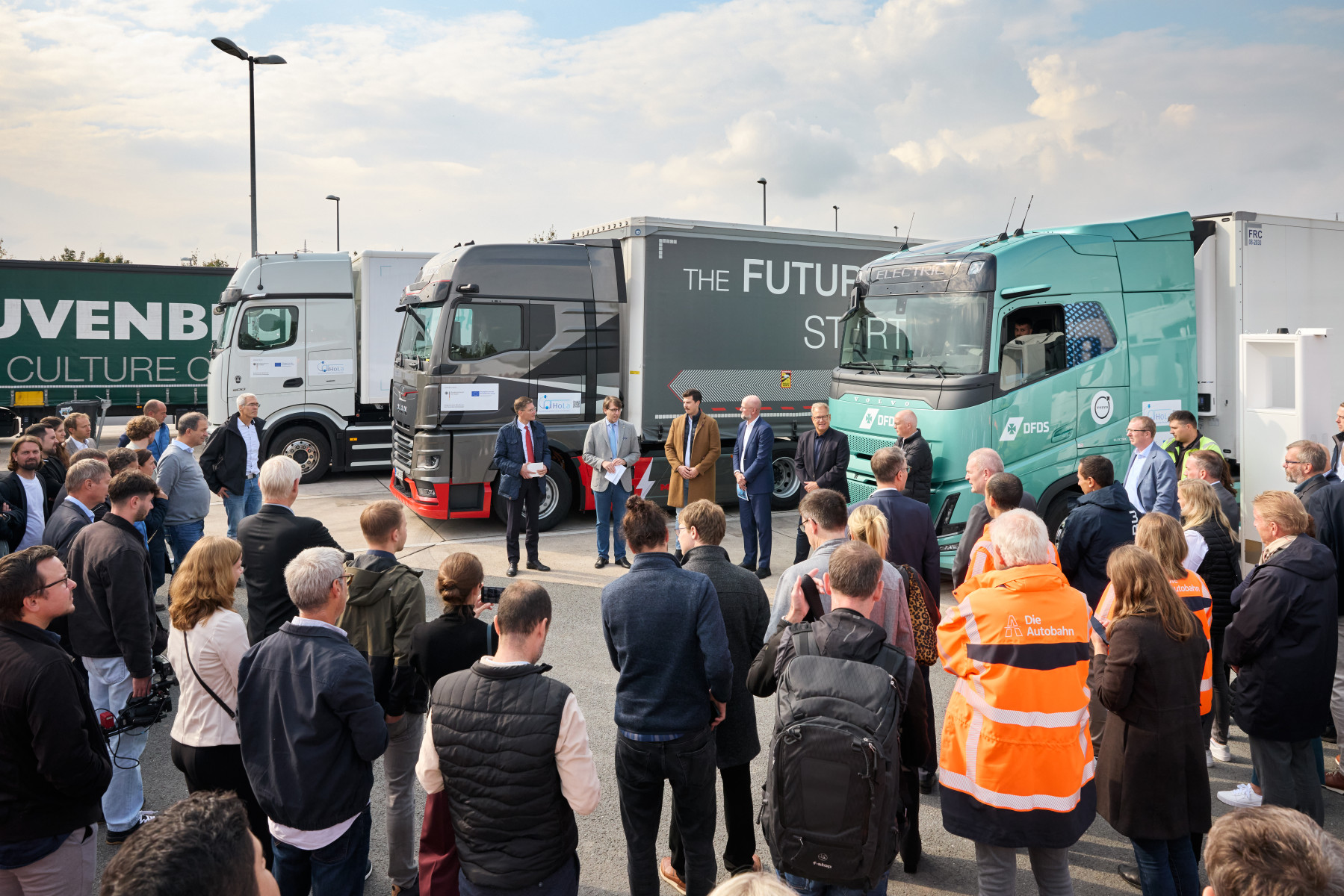
Image source: MAN Truck & Bus.

Image source: MAN Truck & Bus.
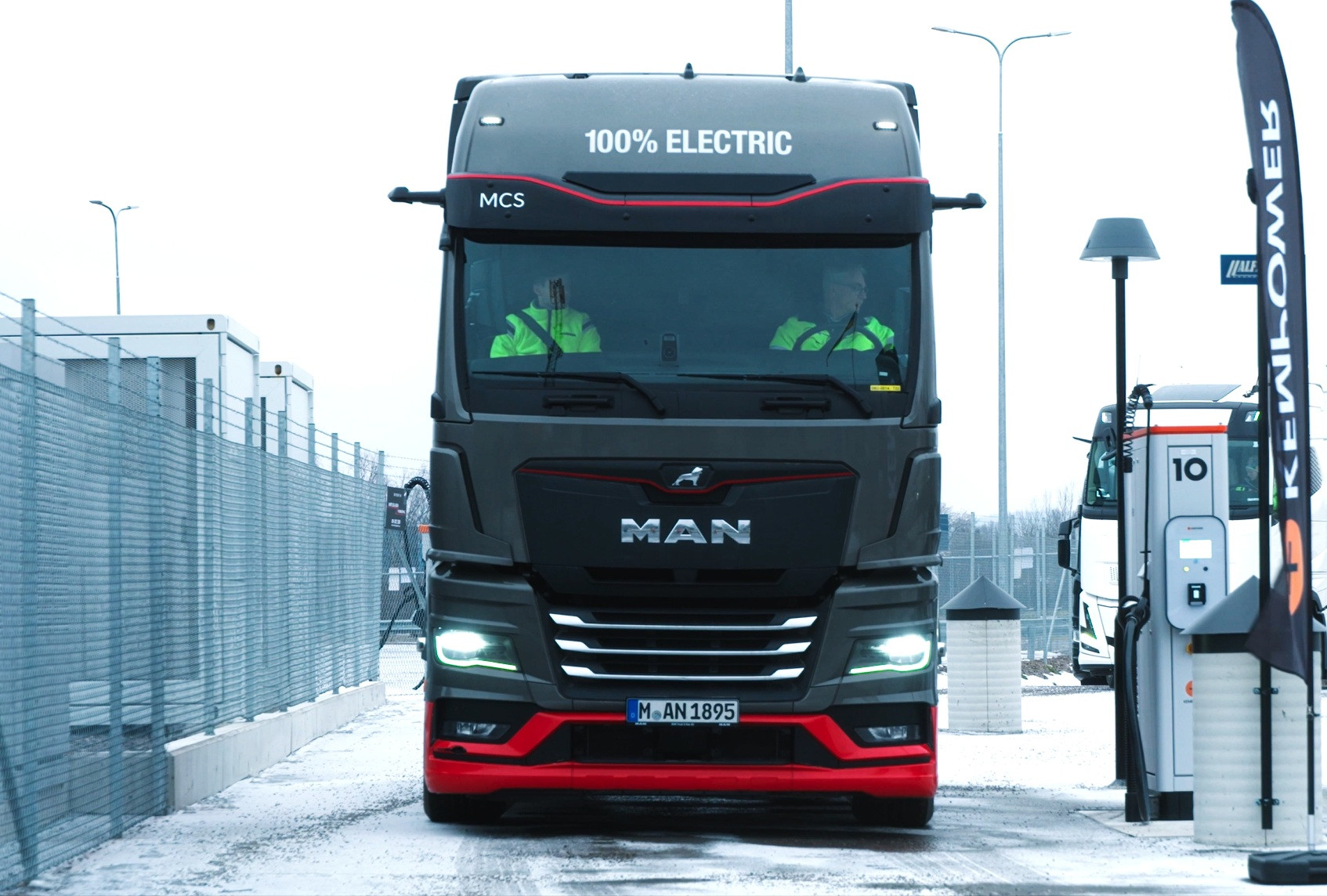
Image source: MAN Truck & Bus.
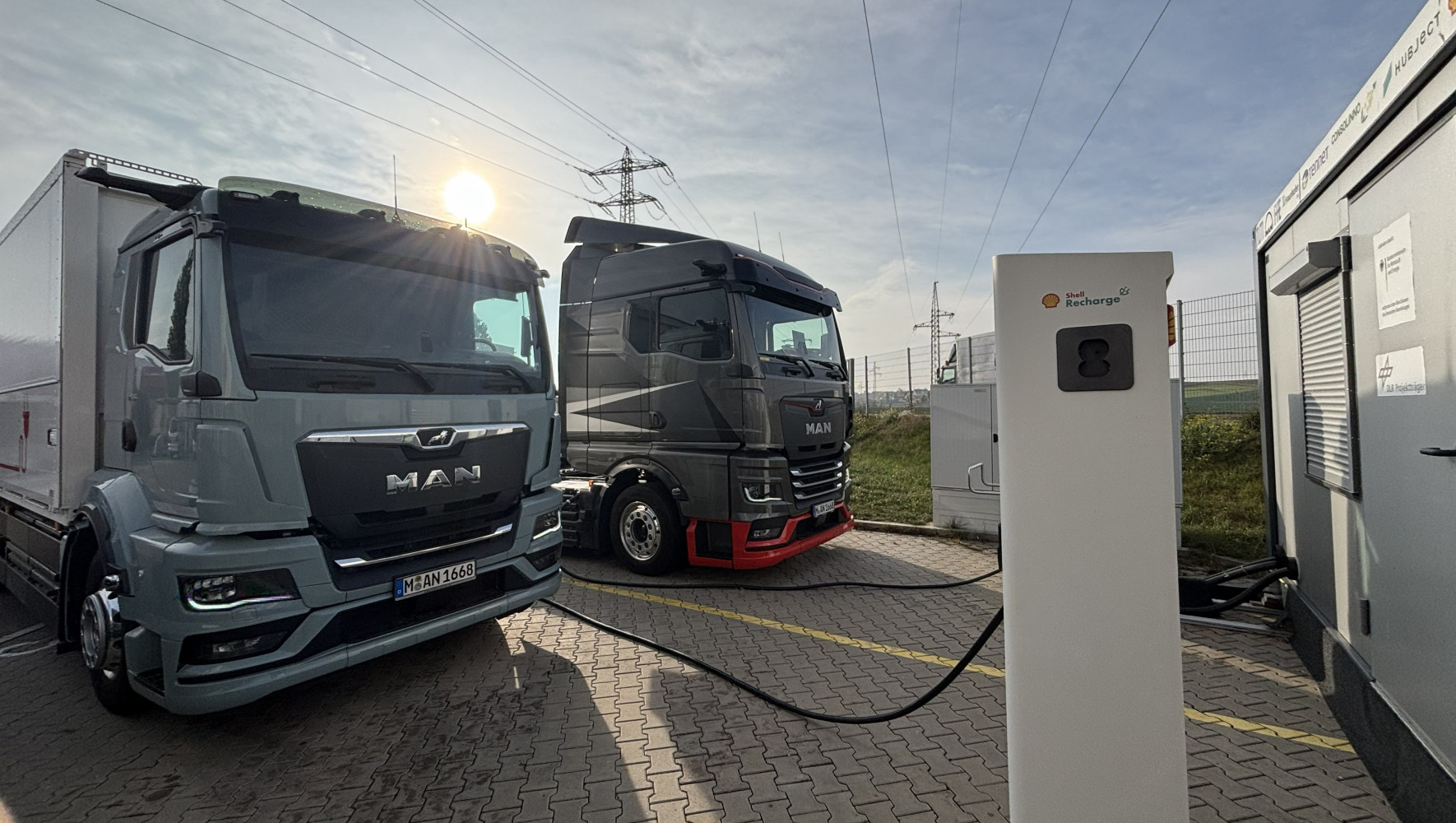
Image source: MAN Truck & Bus.



Source: Chart by AutoMusic based on the public sources listed in the article; first published on the AutoMusic WeChat account.