Battery installations outside China: Chinese suppliers hold 56.4% share
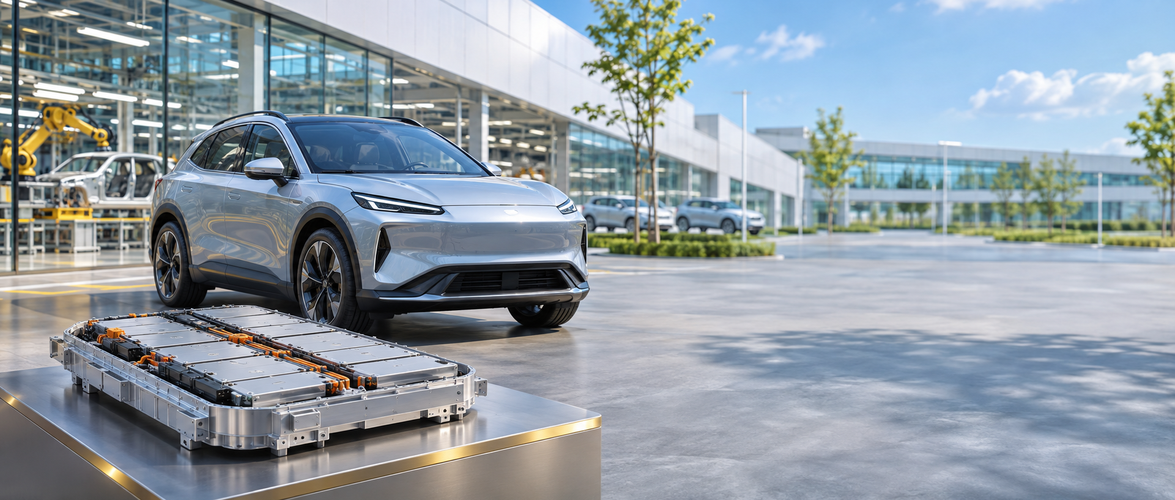
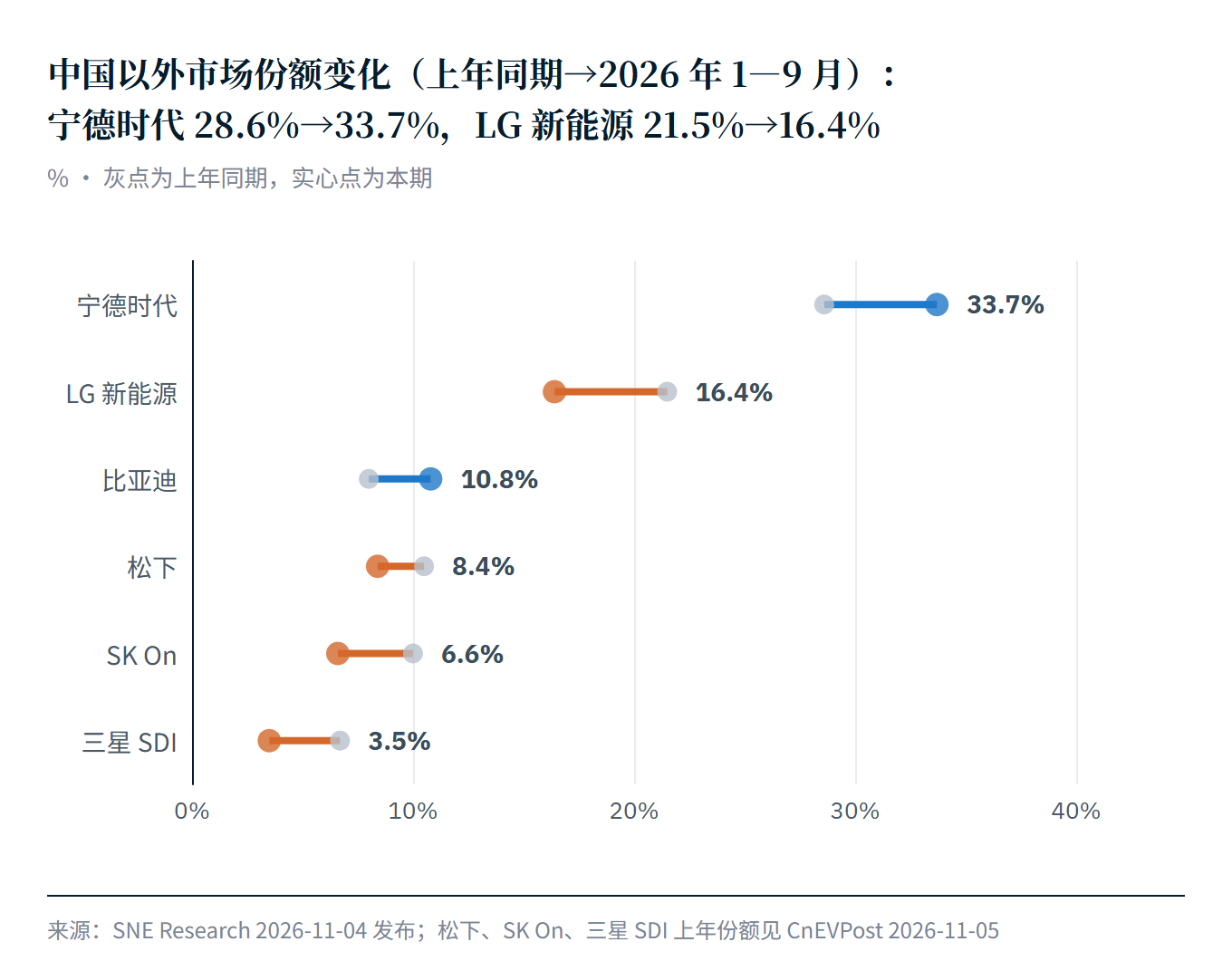
Data published on Nov 4 by Korean research firm SNE Research show that EV battery installations outside China reached about 426.7 GWh in months 1–9 of 2026, up 24.7% year on year. That beats the global growth rate of 19.7%. The figures cover BEVs, PHEVs and hybrids. Six Chinese companies in the top ten raised their combined share from 43.1% to 56.4%. Based on these shares and growth rates, the market grew by about 84.5 GWh over the year. The six Chinese companies added about 93 GWh, more than the whole market's increase, while the three Korean companies lost about 18 GWh. Almost all of the net growth outside China over the year came from Chinese battery makers, while installations by Japanese and Korean companies shrank.
New installations
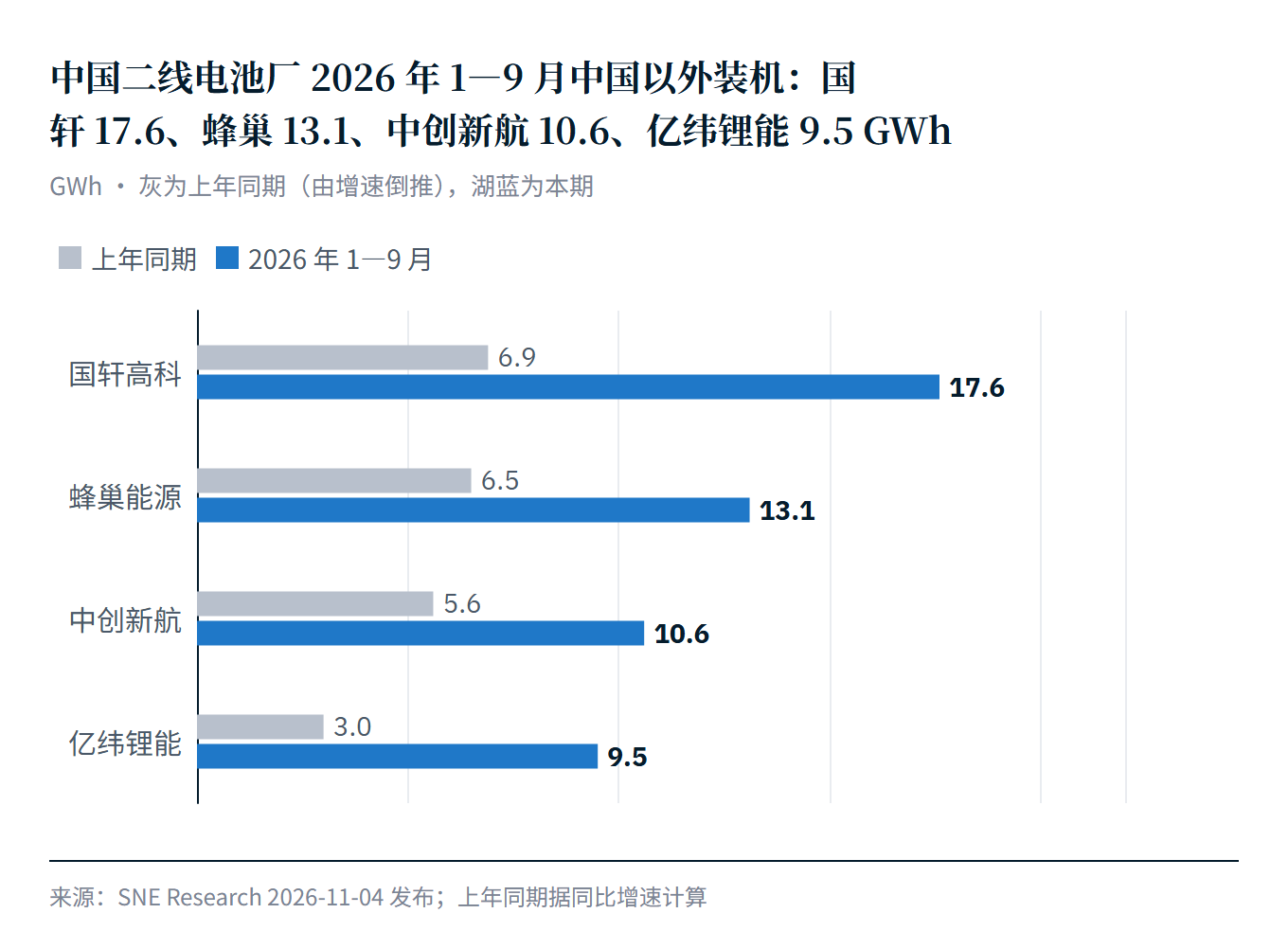
CATL installed 143.7 GWh, up 46.7%, lifting its share from 28.6% to 33.7%. BYD installed 45.9 GWh, up 66.8%, with its share rising from 8.0% to 10.8%; together the two held 44.5%. BYD's batteries go mainly into its own vehicles, and with growing vehicle exports and overseas production, its installations rose 68.8% in Europe and 135.7% in South America. Second-tier suppliers grew even faster: Gotion installed 17.6 GWh, up 153.8%, overtaking Samsung SDI for sixth place; EVE Energy installed 9.5 GWh, up 214.6%, the fastest growth in the top ten. Over the same period, on a global basis, CATL's share was 39.1%, and the seven Chinese suppliers together held 73.0%.
More than half of traction batteries installed in vehicles outside China now come from Chinese suppliers, and not just CATL.
Korean battery makers' North American installations
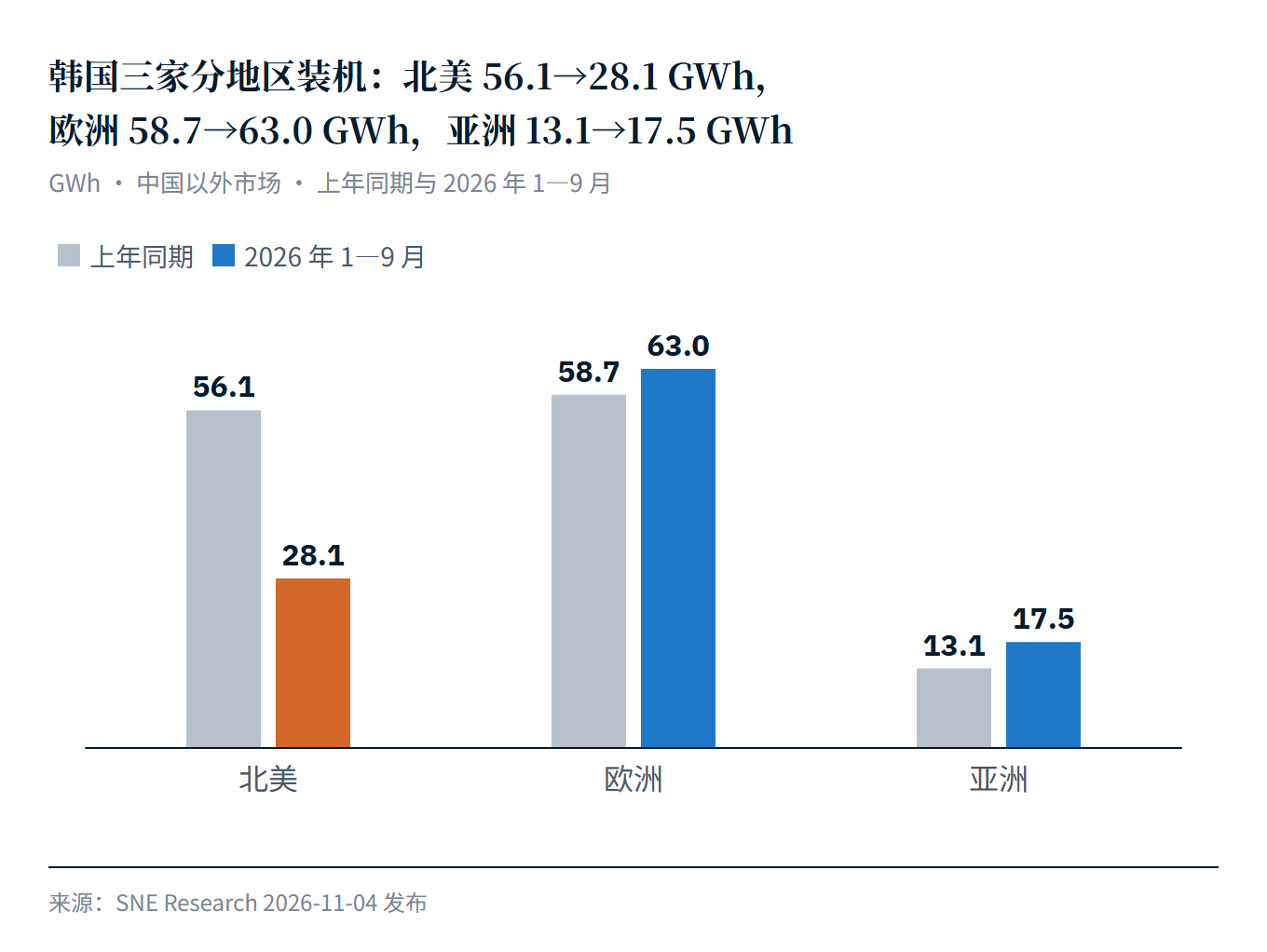
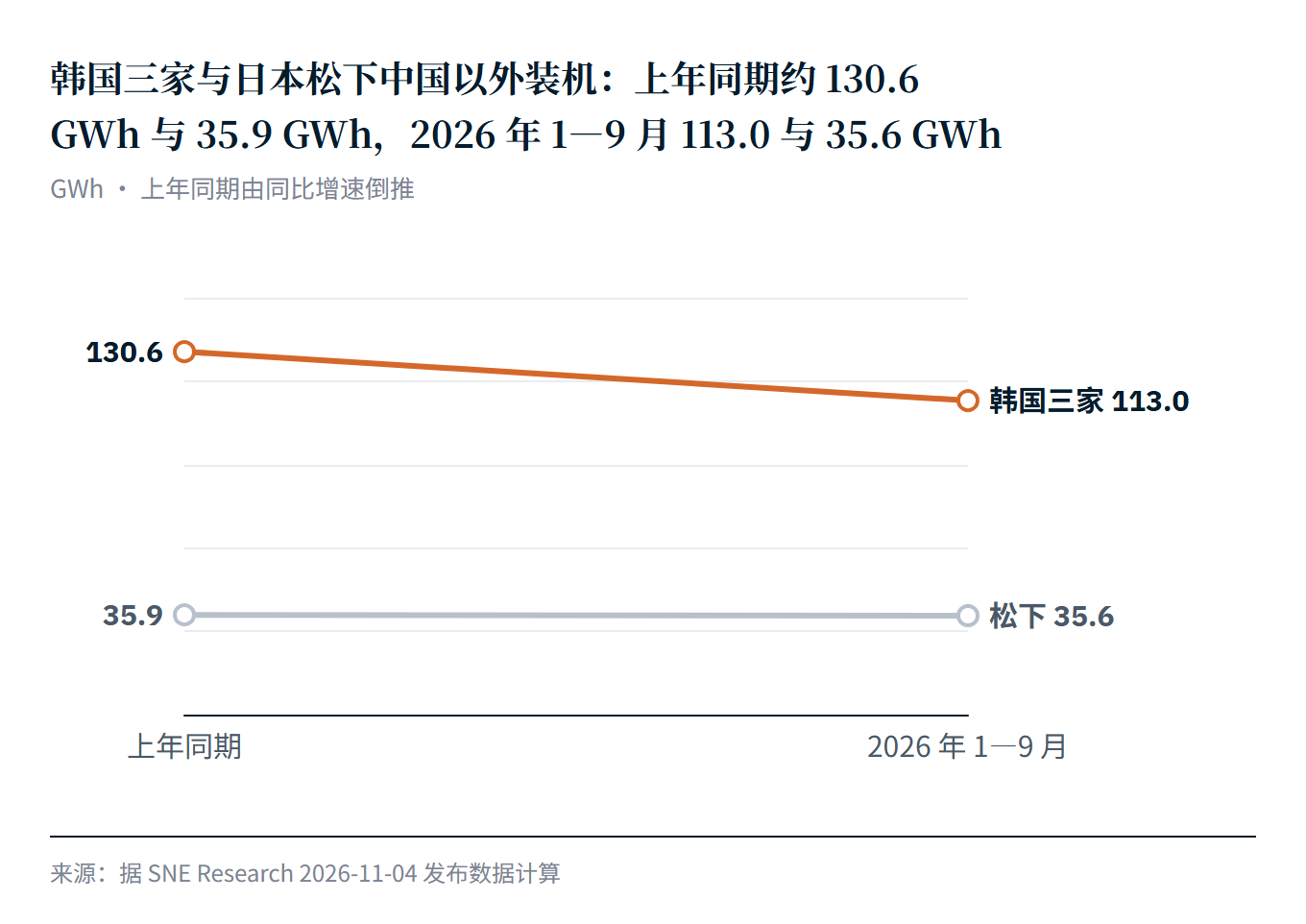
The three Korean makers combined for 113.0 GWh, down 13.5%, with their share falling from 38.2% to 26.5%. The decline was concentrated in North America, where their installations fell from 56.1 GWh to 28.1 GWh, while the overall North American market fell 24.3% to 85.9 GWh — the Korean makers declined at roughly twice the market rate. In Europe, their installations rose from 58.7 GWh to 63.0 GWh. Samsung SDI fell 34.4%, the steepest drop among the top ten. EV demand in North America weakened after tax credits ended, and LG Energy Solution and Samsung SDI relied on energy storage to improve results in the third quarter
Whether Korean companies can regain share in automotive batteries depends first on EV demand in North America. For now they are relying mainly on energy storage to fill their production lines.
European supply conditions
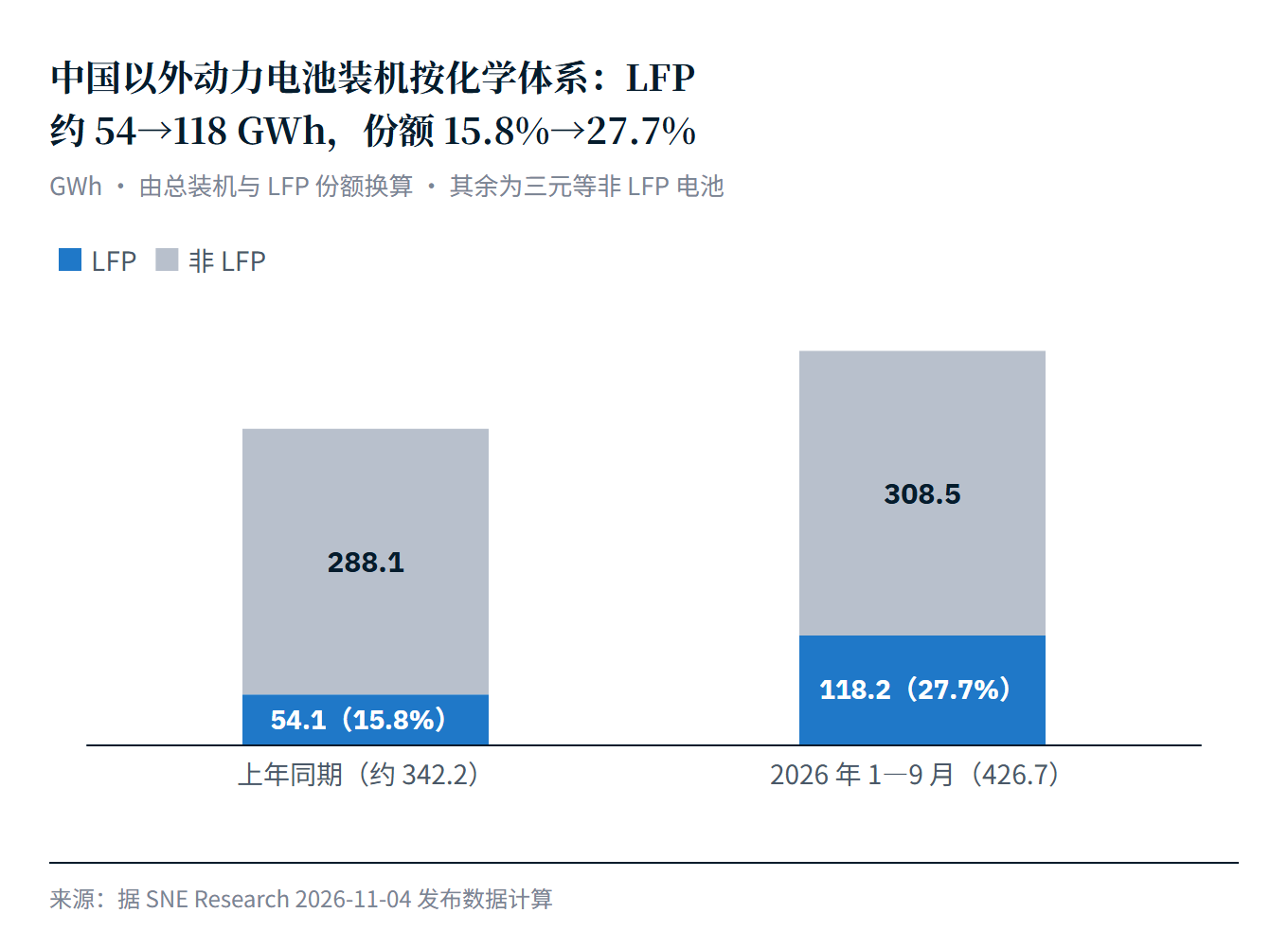
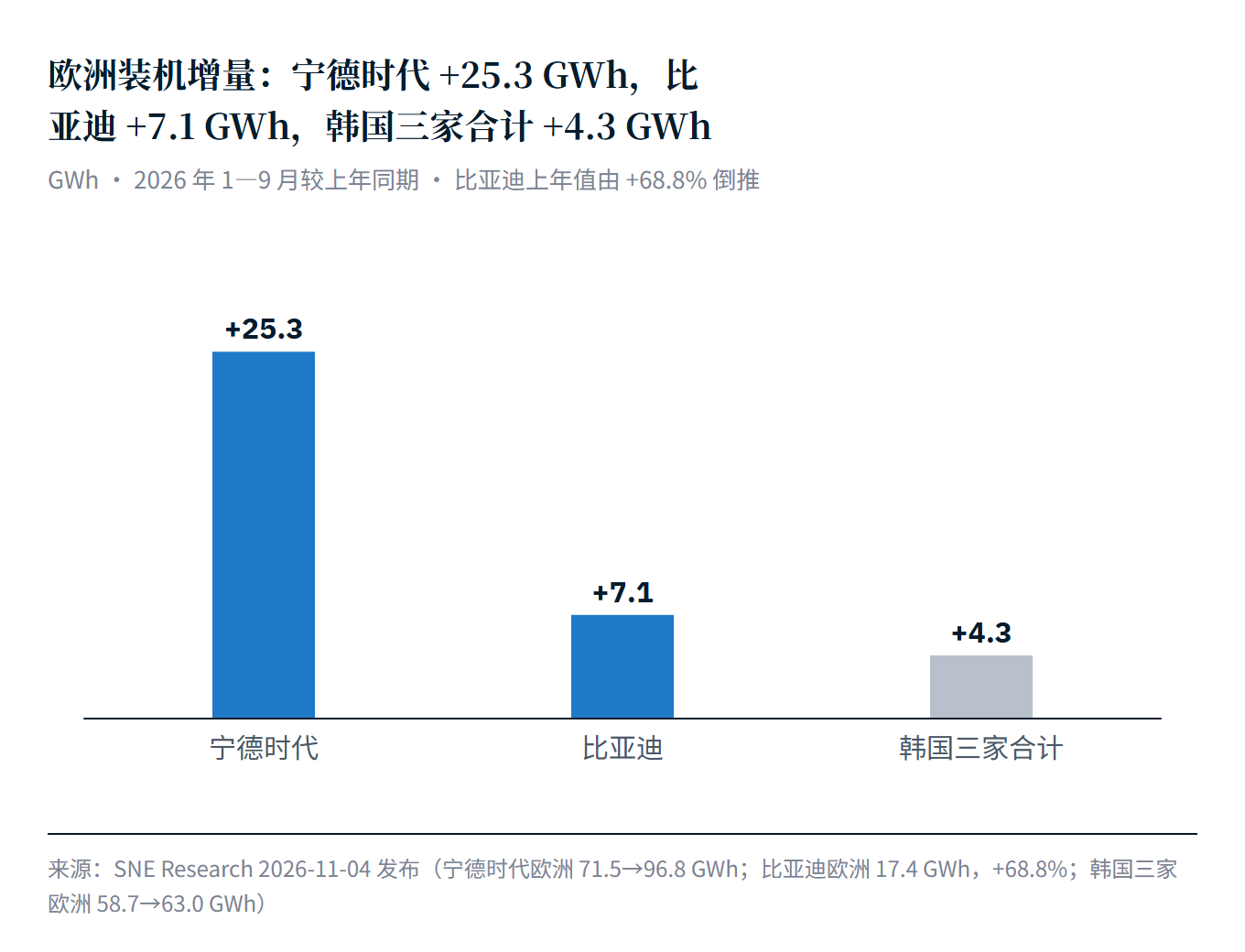
LFP's battery share in markets outside China rose from 15.8% to 27.7%, with installations more than doubling. In Europe, LFP is mainly used in entry-level models, making price competitiveness the key factor in OEMs' supplier choices. CATL's installations in Europe reached 96.8 GWh, up 25.3 GWh in a year, while the three Korean makers together added only 4.3 GWh in Europe. CATL's plant in Debrecen, Hungary began trial production on its first two lines in Sep 22, with planned capacity of 100 GWh. Under the EU Battery Regulation, EV batteries placed on the EU market from Feb 18, 2027 must carry a digital "battery passport".
European automakers will weigh price more heavily in their next round of battery sourcing decisions. When Debrecen reaches volume production will determine whether CATL can supply locally, while the battery passport requires cell makers and automakers to sort out data delivery in advance.
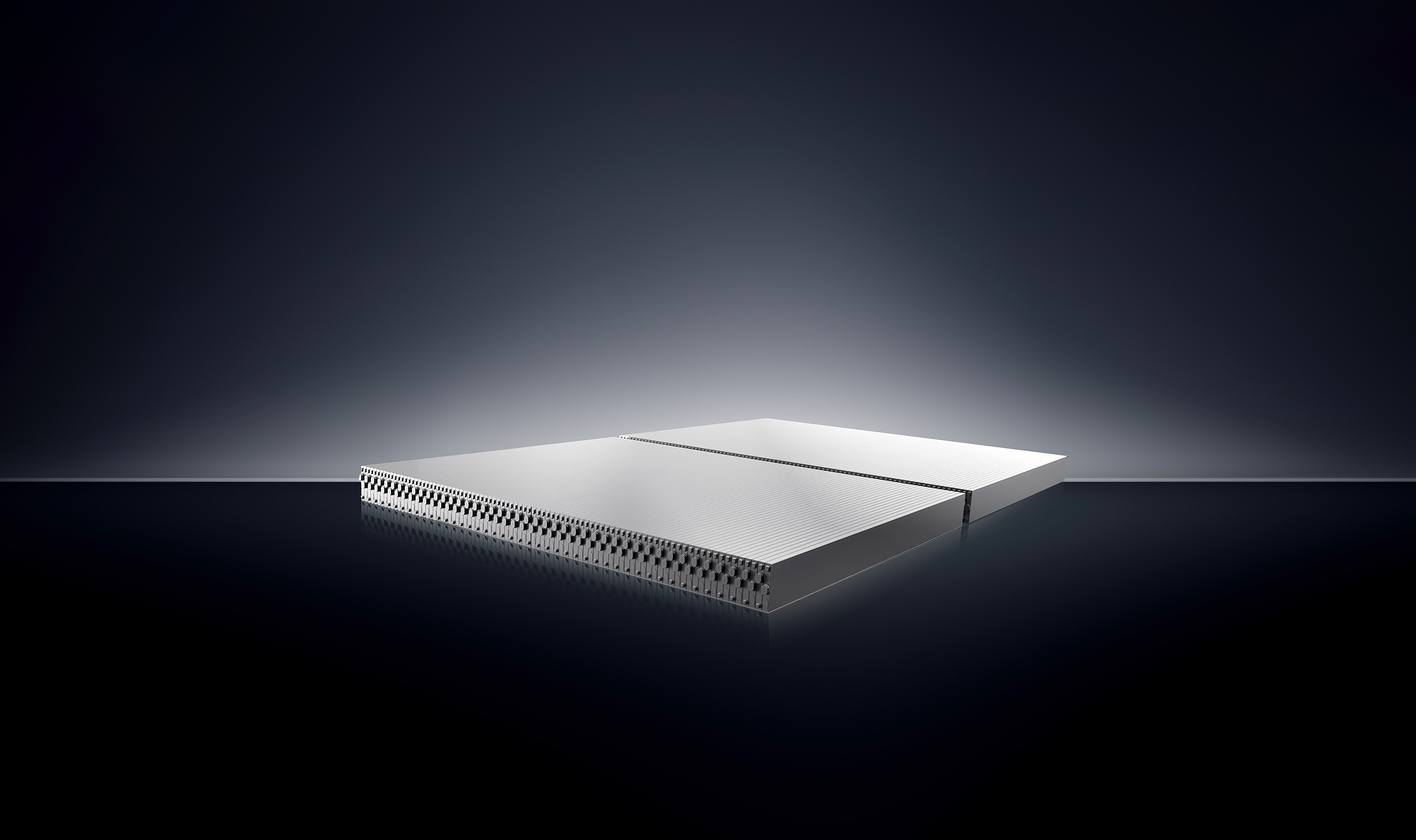
Image: BYD.
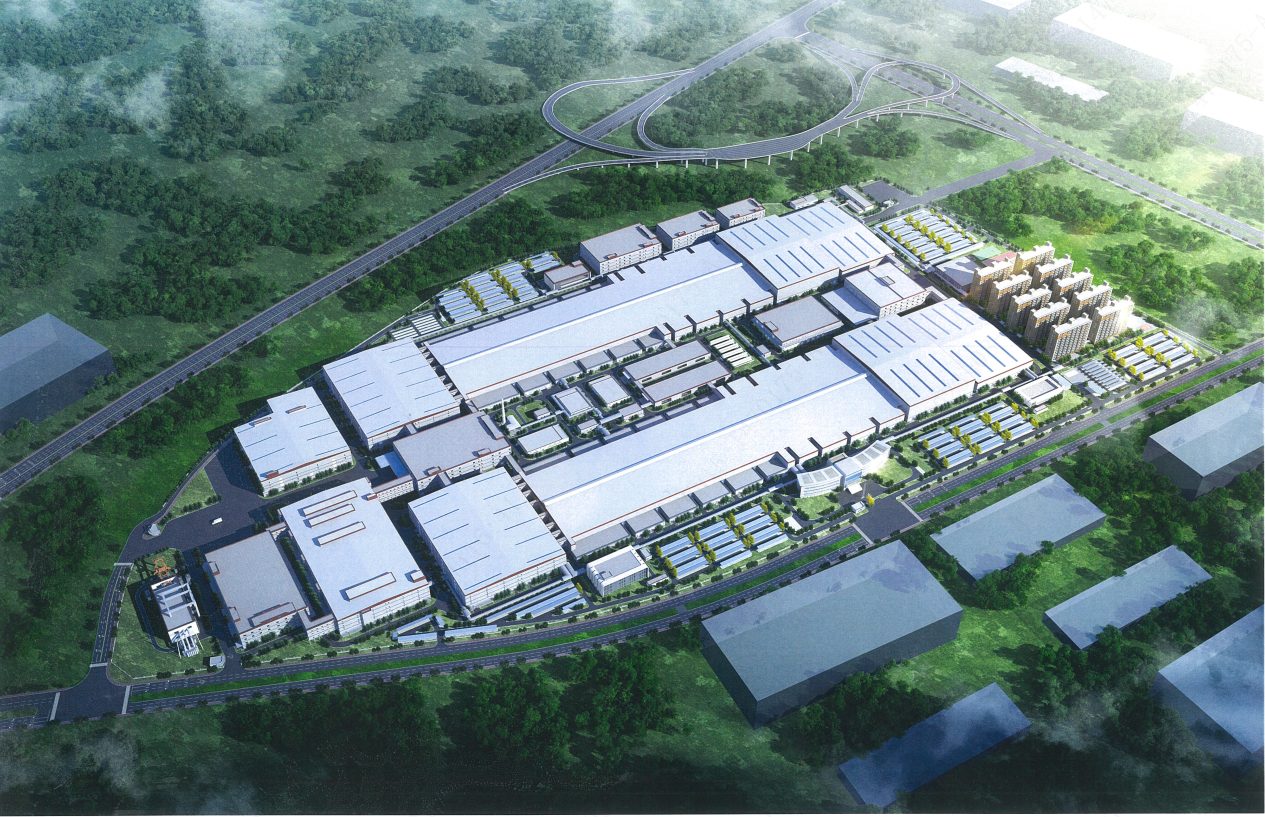
Image source: CATL.
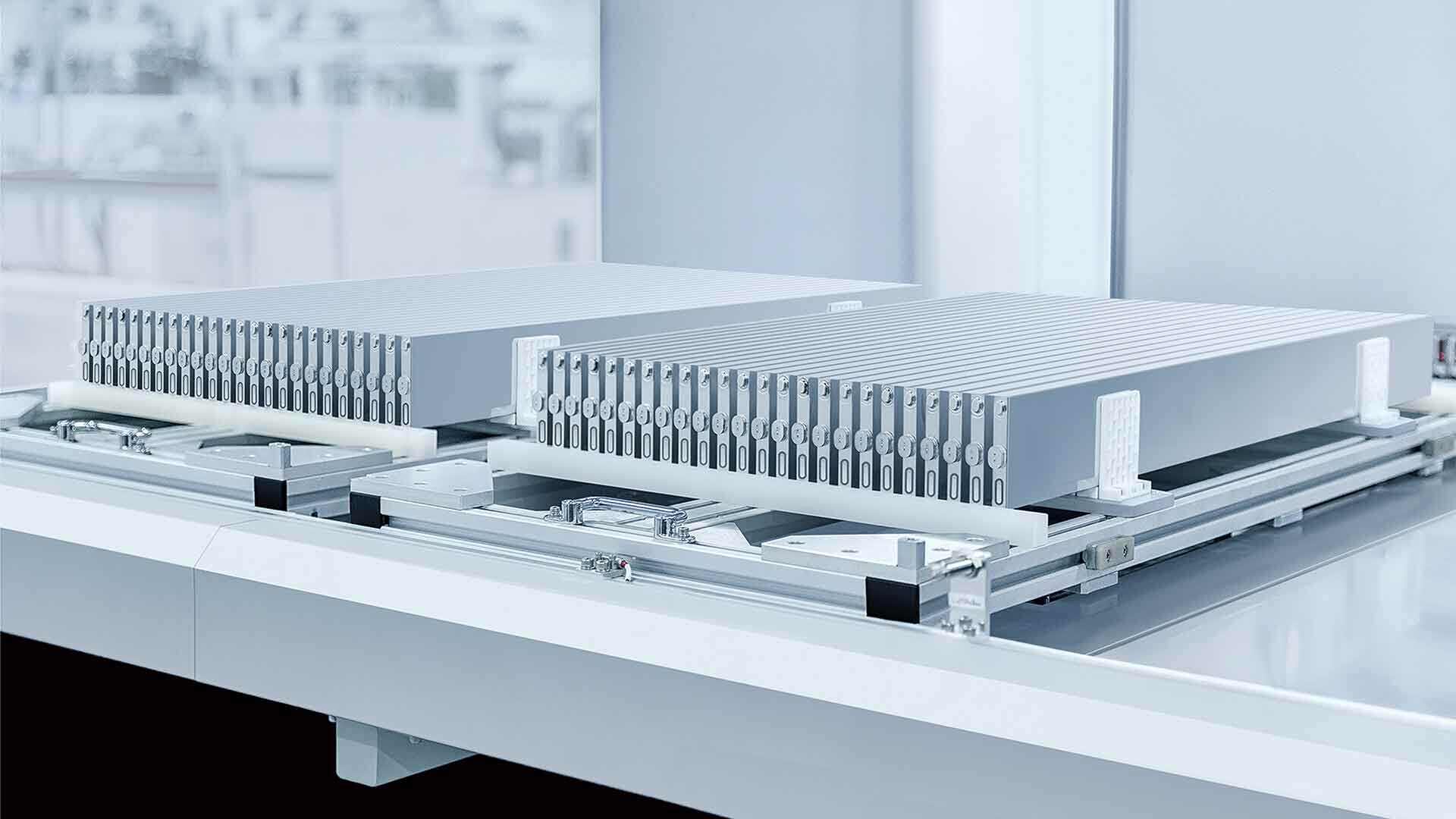
Image: BYD.
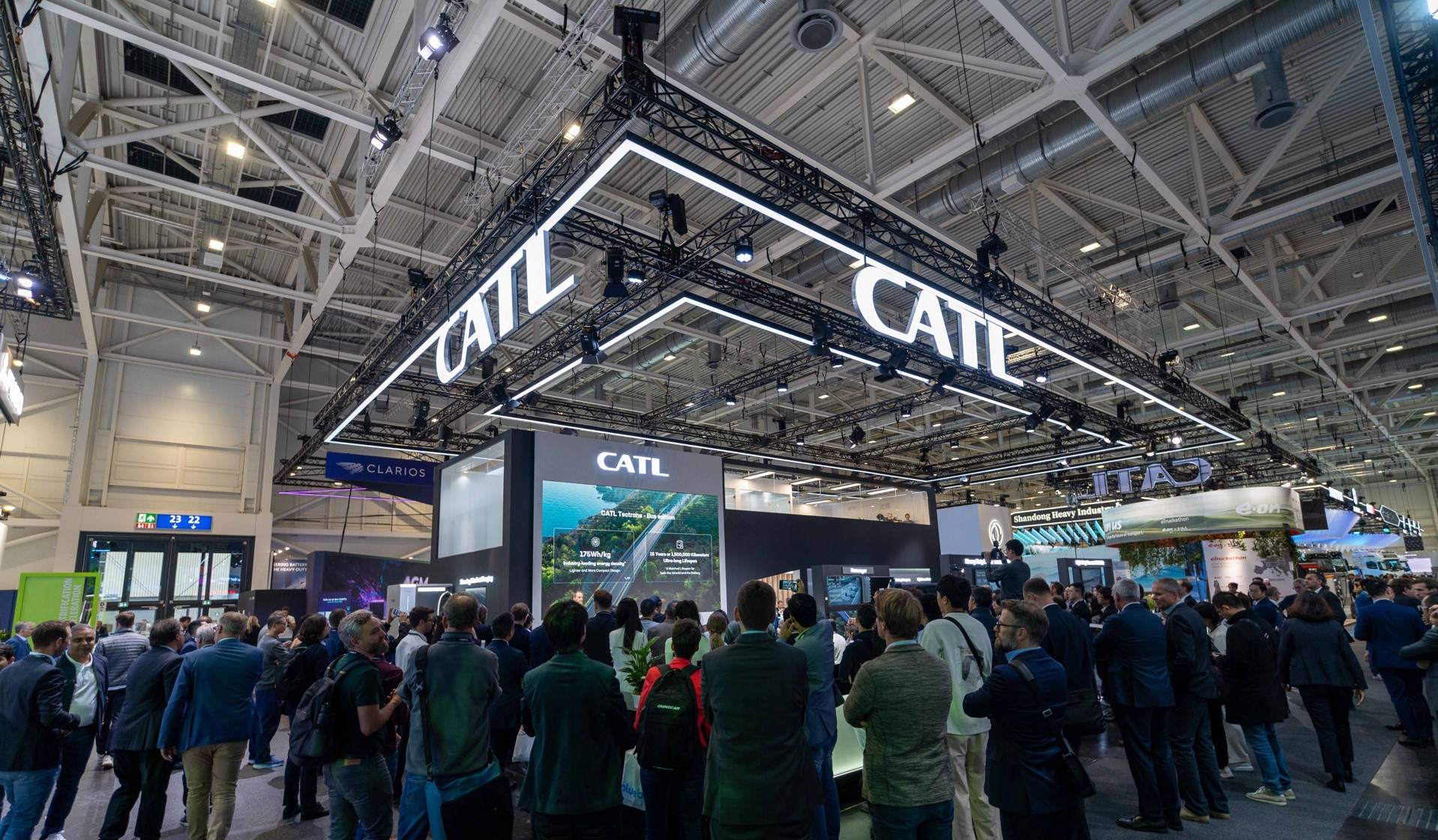
Image source: CATL.
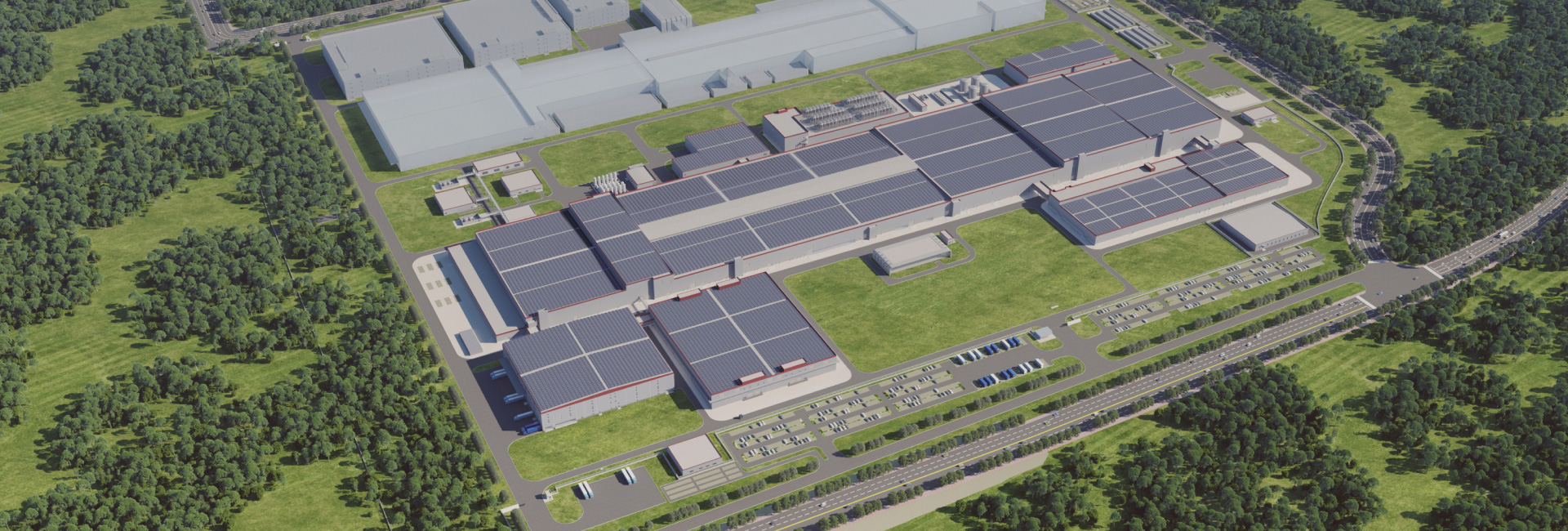
Image source: CATL.
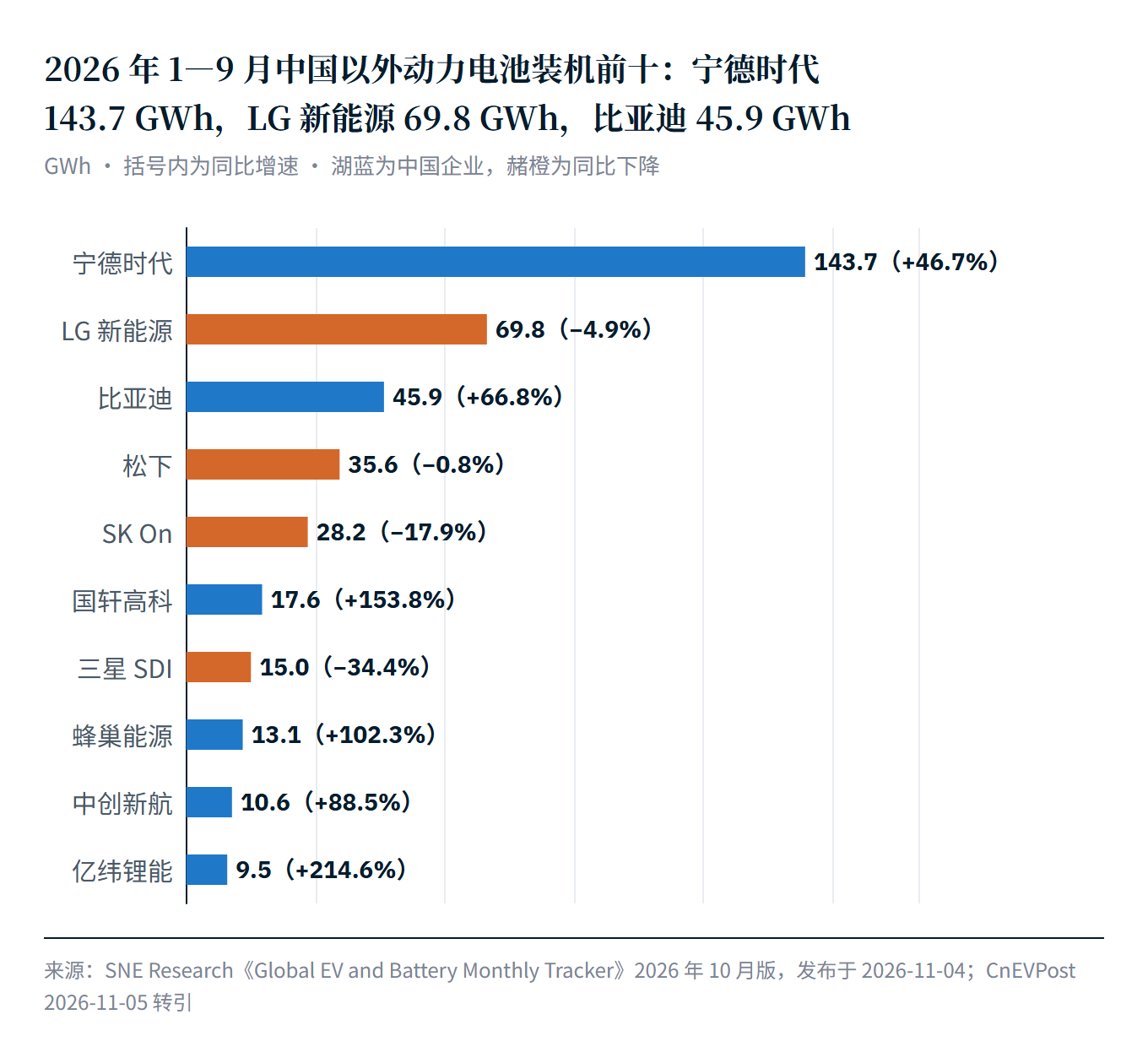
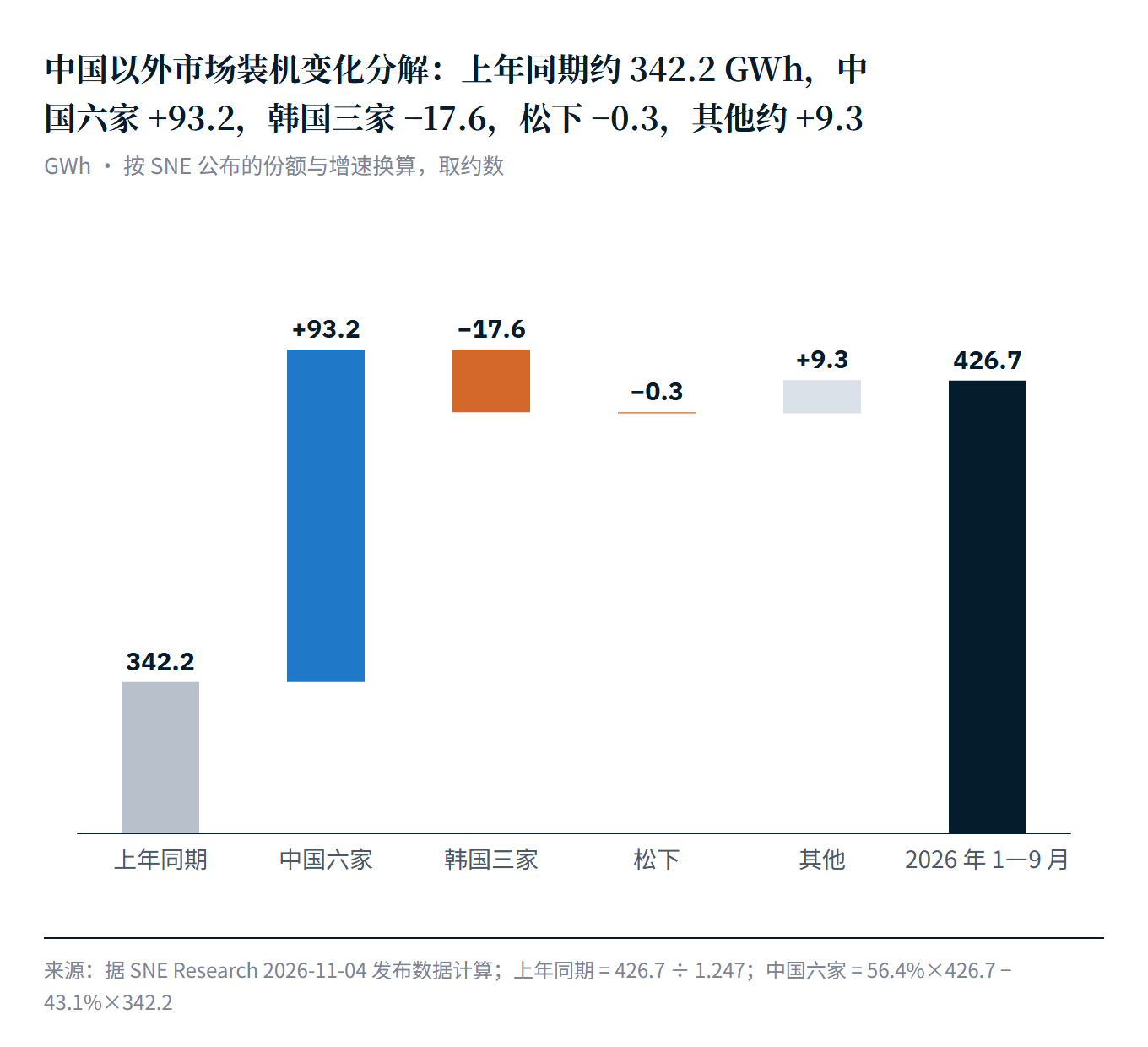
Source: Chart by AutoMusic based on the public sources listed in the article; first published on the AutoMusic WeChat account.