ACEA publishes guiding principles on localisation requirements; commercial vehicles face new "Made in Europe" rules
ACEA recently published its "Guiding Principles and Policy Recommendations on Localization Requirements" for heavy commercial vehicle manufacturers, explicitly calling for "Made in Europe…
ACEA recently published its "Guiding Principles and Policy Recommendations on Localisation Requirements" for heavy-duty commercial vehicle manufacturers, setting out framework principles for "Made in Europe" local content requirements. The European Commission plans to introduce sustainability, resilience and minimum EU content requirements into procurement in strategic industries. Commercial vehicle manufacturers need a clear regulatory framework.
The EU Industrial Accelerator Act already includes localisation measures aimed at protecting Europe's automotive industry. But commercial vehicles, especially trucks and buses, have entirely different life cycles, supply chain structures and business models.
ACEA's core demands come down to three points: calculation at whole-vehicle level, recognition of R&D activities, and differentiated timelines. What really determines the scale of the impact is not "whether there should be local content requirements (LCR)", but "how they are calculated, at what level of detail, and which value counts towards LCR".
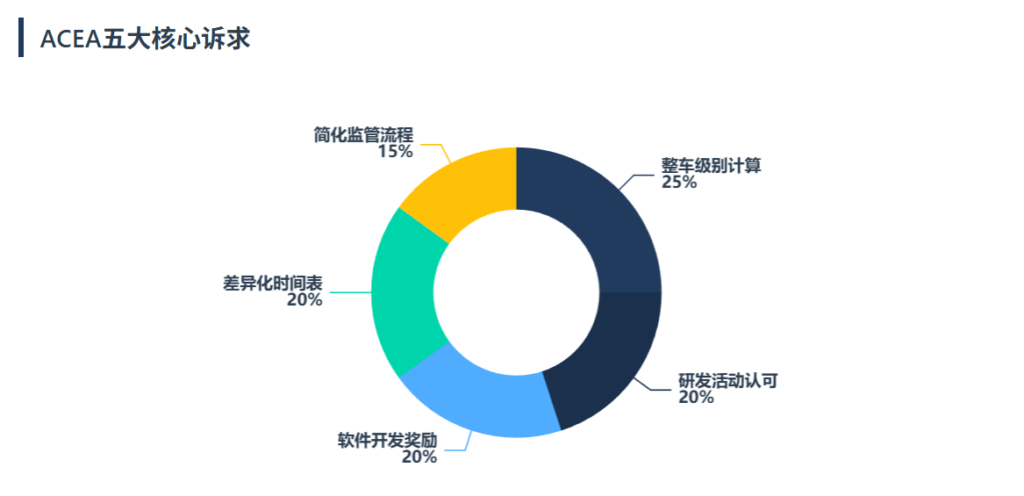
At vehicle level, not component level
In its guiding principles, ACEA stressed that the local content requirement (LCR) framework should apply at the vehicle or EU fleet level rather than being defined at component level. The global supply chain for heavy commercial vehicles is already highly specialised: a single truck may combine a German cab, a Swedish powertrain, a French gearbox and Japanese electronic control systems. Requiring every component to meet a localisation ratio would make the rules simply unworkable.
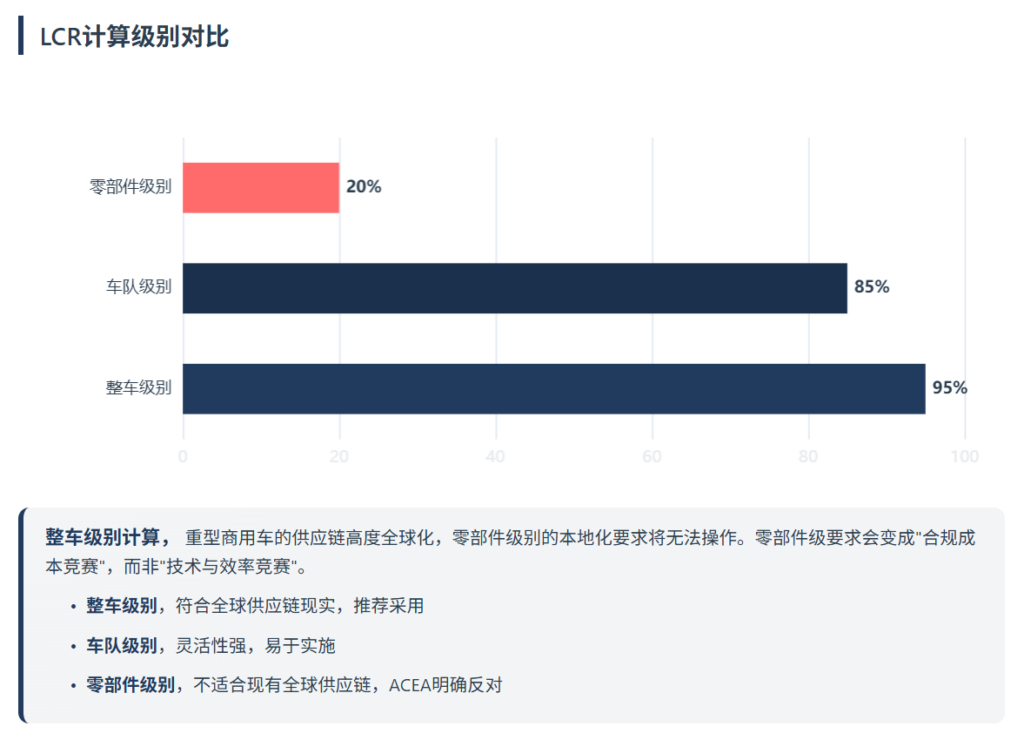
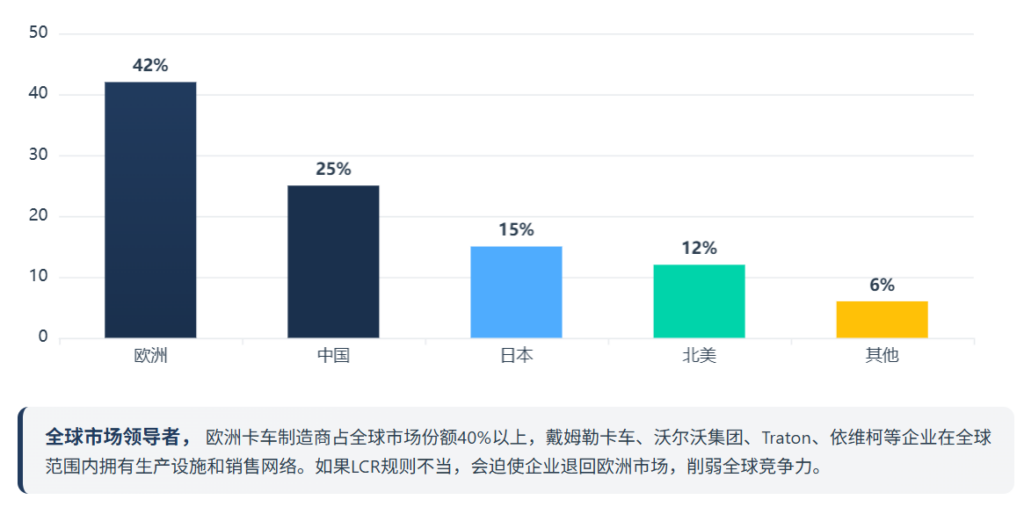
ACEA's position is clear: a component-level definition does not suit existing global supply chains, and vehicle-level calculation is the only workable approach. Over the past two decades, European commercial vehicle manufacturers have built supply chain networks spanning the globe. Companies such as Daimler Truck, Volvo Group, Volkswagen Commercial Vehicles and Iveco build cabs and chassis in Europe, produce engines in Brazil, assemble complete vehicles in India and sell in North America. This global footprint is itself a competitive advantage.
Component-level localisation requirements would force companies to rebuild entire supply chains. This would not only require huge investment but also push costs up sharply. ACEA warns that forcing EU manufacturers to become more "made in EU" would mean higher costs for customers, potential market distortion and an uneven competitive landscape.
Once it becomes "a certain part must be made in the EU, a certain module must carry an EU certificate of origin", the result is likely not a stronger industry but harder delivery, higher costs and more complex audits. A vehicle/fleet-level basis is more realistic and more enforceable, leaves companies room to combine options, and avoids forcibly disrupting supply chains.
R&D and software must also count in the calculation rules
ACEA's second core demand is that R&D and software development carried out in the EU should be recognised and rewarded under the LCR framework. Today's trucks and buses are no longer just hardware. Traditional components such as the cab, chassis, powertrain and battery are giving way to integrated software architectures for connectivity and autonomous driving. A modern truck already runs more than 10 million lines of software code, and that figure is still rising.
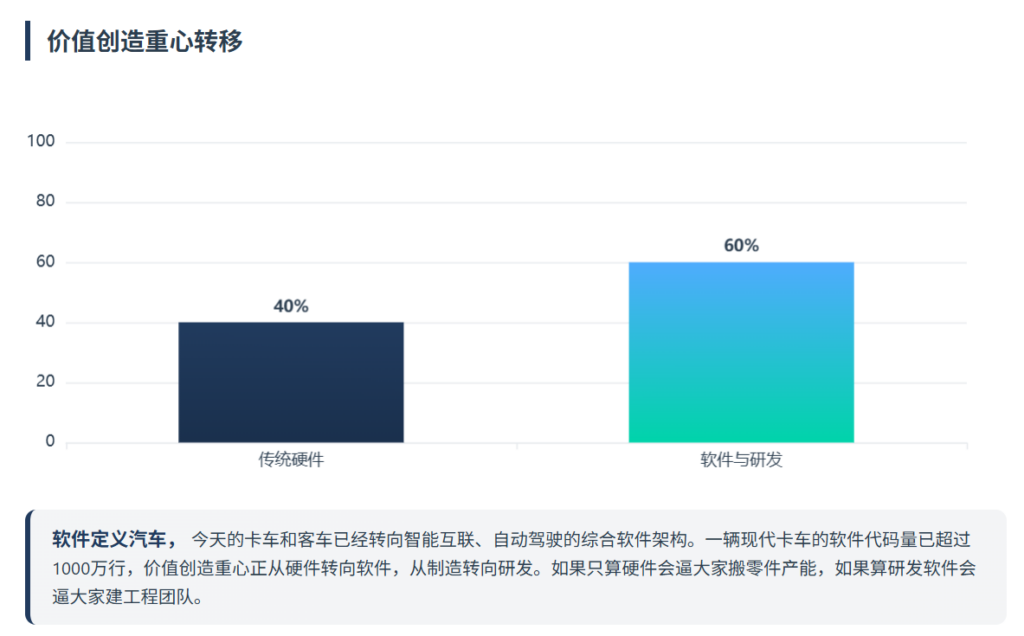
ACEA notes in the paper that future commercial vehicles will be more connected, potentially automated, and built on integrated software architectures. The centre of value creation is shifting from hardware to software and from manufacturing to R&D. If the LCR counts only value from manufacturing and does not recognise R&D and software, it would seriously distort industrial reality. ACEA asks that R&D activities carried out in the EU be recognised and rewarded, and that software developed and deployed in the EU receive the same treatment.
The EU already counts battery R&D when calculating local content for new energy vehicles. ACEA wants this principle extended to commercial vehicles, especially software and autonomous driving technology. Europe has strengths in commercial vehicle software development, systems integration and autonomous driving algorithms. If the LCR framework does not give these intangible assets full credit, it will erode the European auto industry's technological lead.
Differentiated timeline
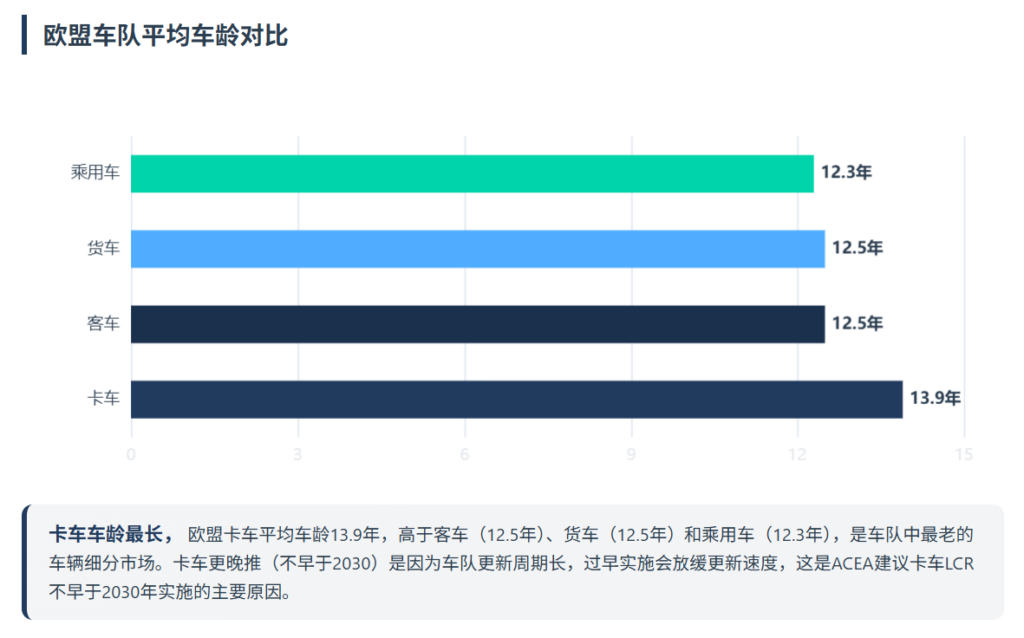
ACEA's third core demand is a differentiated timeline for different vehicle types. For trucks, ACEA proposes phasing in the LCR no earlier than 2030. Trucks generally have longer replacement cycles than passenger cars, and the average age of Europe's truck fleet already exceeds 12 years. Introducing the LCR too early would slow fleet renewal and in fact work against emission reduction targets.
Buses are a completely different story. ACEA explicitly says public procurement is mainly about buses and that immediate action is needed. The bus market already faces intense competitive pressure and lacks a level playing field. In Europe, buses are bought mainly through public tenders, and local authorities and transit operators are the main buyers. If tender rules are unclear or poorly enforced, non-EU manufacturers could win orders on price, leaving European manufacturers at a disadvantage.
City buses are more of a "policy pilot zone": rules land first where public money is most concentrated, implemented through tender clauses, scoring mechanisms and compliance audits. For companies in electric buses, charging and fleet solutions, the most likely change in Europe over the next two to three years is not necessarily restrictions on end consumers but restrictions on bid documents.
LCR is only a supporting tool
ACEA has repeatedly stressed that the LCR should be seen as a complementary tool, not a standalone solution. The LCR alone cannot solve every problem facing Europe's commercial vehicle industry. Strengthening the resilience and competitiveness of Europe's industrial value chain requires supporting policies such as competitive energy prices, a targeted incentive framework, supportive regulatory measures and skills development. The LCR is only one part of this policy mix.
If Europe's electricity prices, labour costs, production line efficiency and talent supply do not measure up, using LCRs alone to "lock" procurement into Europe will most likely raise costs for customers, slow fleet renewal and distort the market. A policy meant to protect industry could instead weaken affordability on the demand side and make the electrification transition harder.
Regional scope and simplification principles
ACEA also made two technical proposals: the geographic scope should reach beyond the 27 European countries, and the LCR rules should be simplified. On scope, ACEA proposes taking the 27 European countries as the base while also considering countries with close ties to and deep economic integration with the EU, such as those with specific trade or tariff agreements. Türkiye, the UK and Switzerland are deeply integrated with EU industry, and excluding them entirely would make little sense.
This looks like a technical clause, but it is really a geoeconomic threshold: it decides whether "Made in Europe" means a strictly closed loop within the EU or also includes a ring of "quasi-European supply chain partners". This matters a great deal for corporate strategy. If future rules allow a certain share to come from specific partner countries, the optimal choices for supply chain layout, plant location and parts sourcing will be completely different.
2026 will be a pivotal year
The European Commission plans to introduce a comprehensive automotive package and an Industrial Accelerator Act in 2026, which will be the key milestone in determining the LCR's final form. ACEA's guiding principles and policy recommendations provide an industry perspective on this policy debate. Over the coming months, the European Commission, the European Parliament, member-state governments and industry associations will contest the LCR's detailed rules.
For commercial vehicle OEMs, 2026 will be a year full of uncertainty. The specific form of the LCR, its implementation timeline and its calculation method will all directly affect companies' strategic planning and investment decisions. What is certain is that "Made in Europe" will become a new rule the commercial vehicle industry cannot avoid. How OEMs respond to it will largely determine the future competitiveness of Europe's commercial vehicle makers.
What LCR really aims to filter out is not foreign capital but uncertainty. Its true purpose is not simply to exclude outside players, but to reduce supply risk and the risk of industrial hollowing-out once public funds are committed. Those ultimately eliminated are usually judged not by where they come from, but by whether their delivery and compliance are controllable, their long-term service credible and their industrial contribution verifiable.
**Reproduction or excerpting without permission is strictly prohibited.** Questions and comments are welcome. Follow us for ongoing analysis of the latest developments in China and abroad.