Mercedes-Benz eActros 600 enters Brazil, with fully built imports capped at 70 units
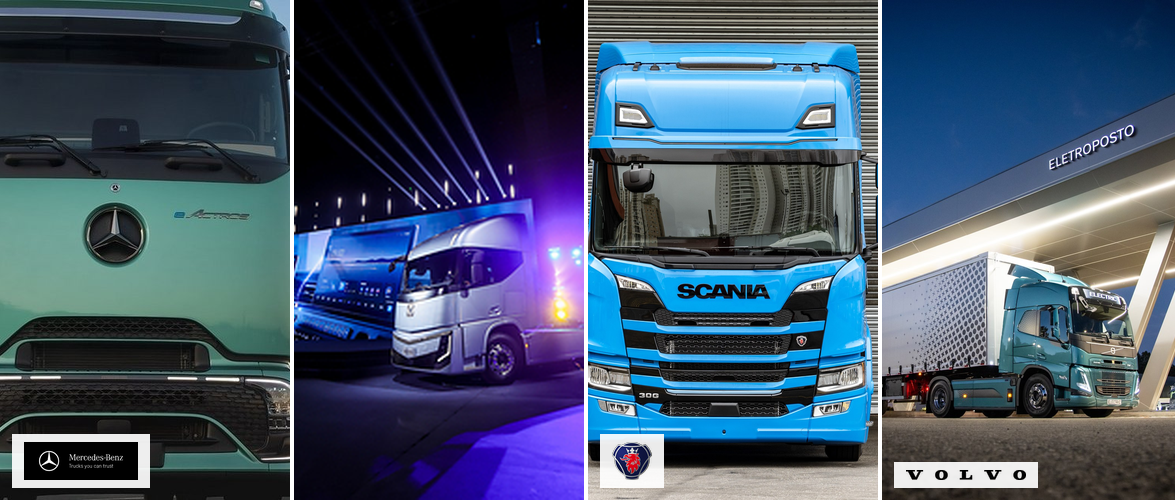
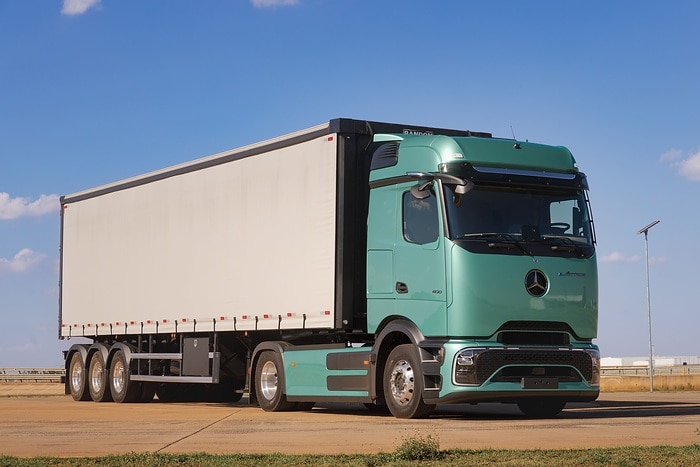
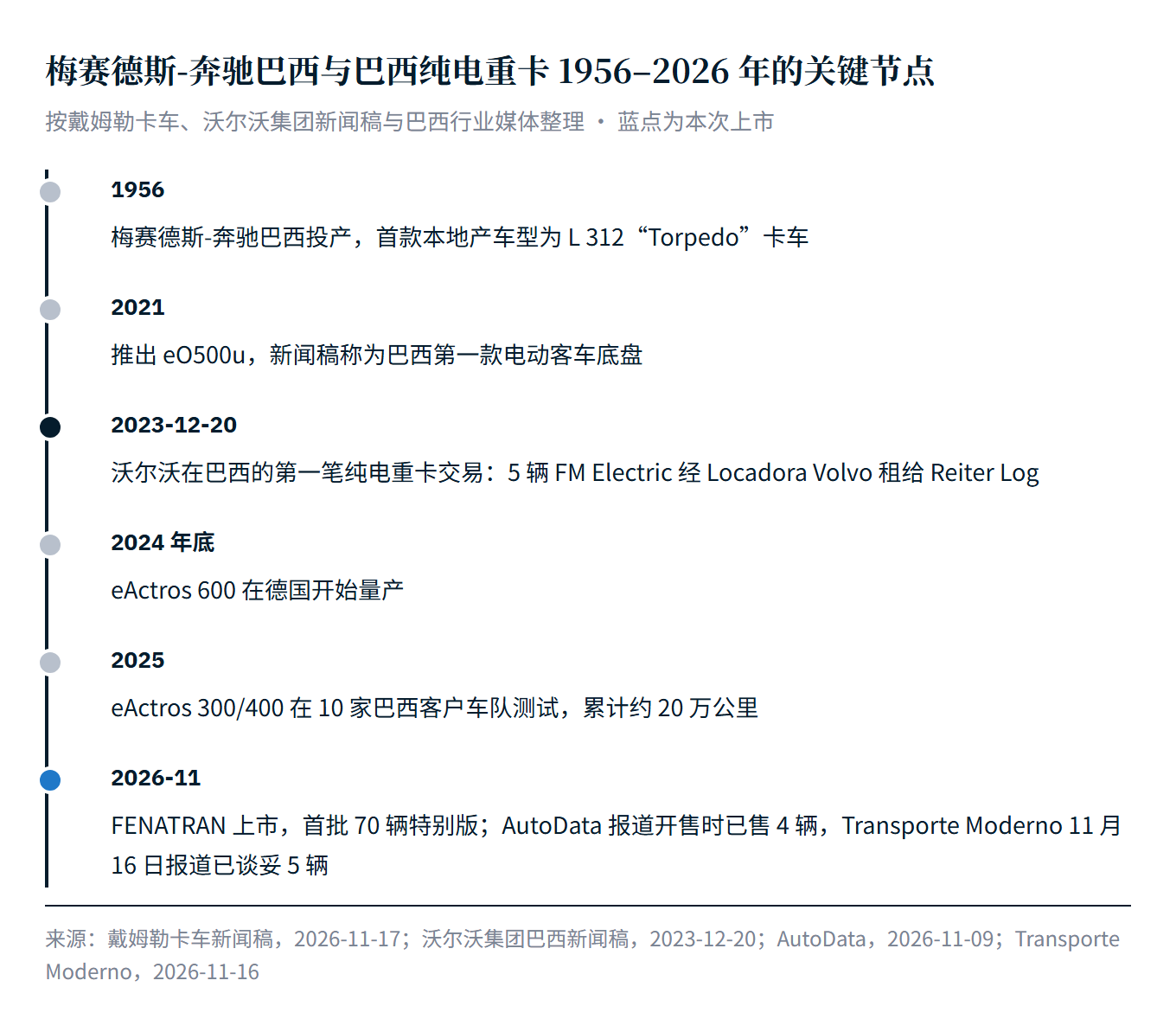
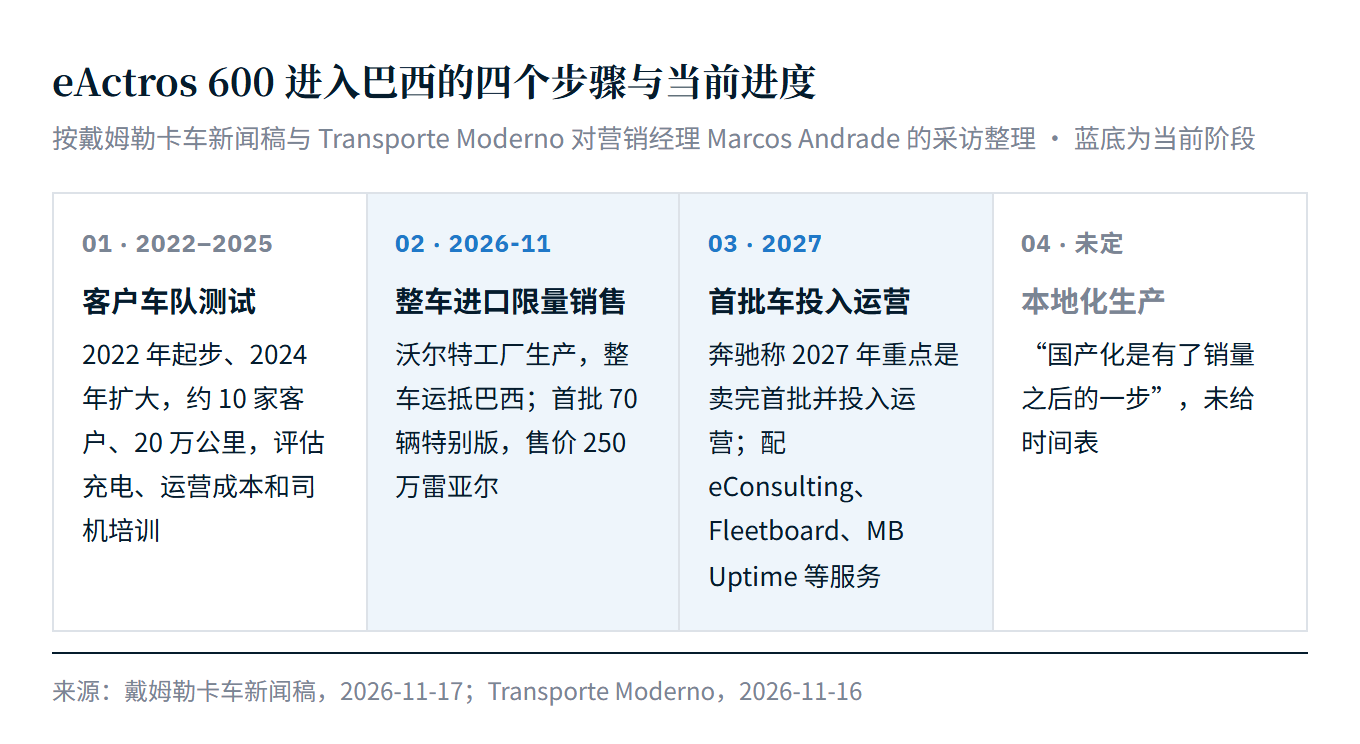
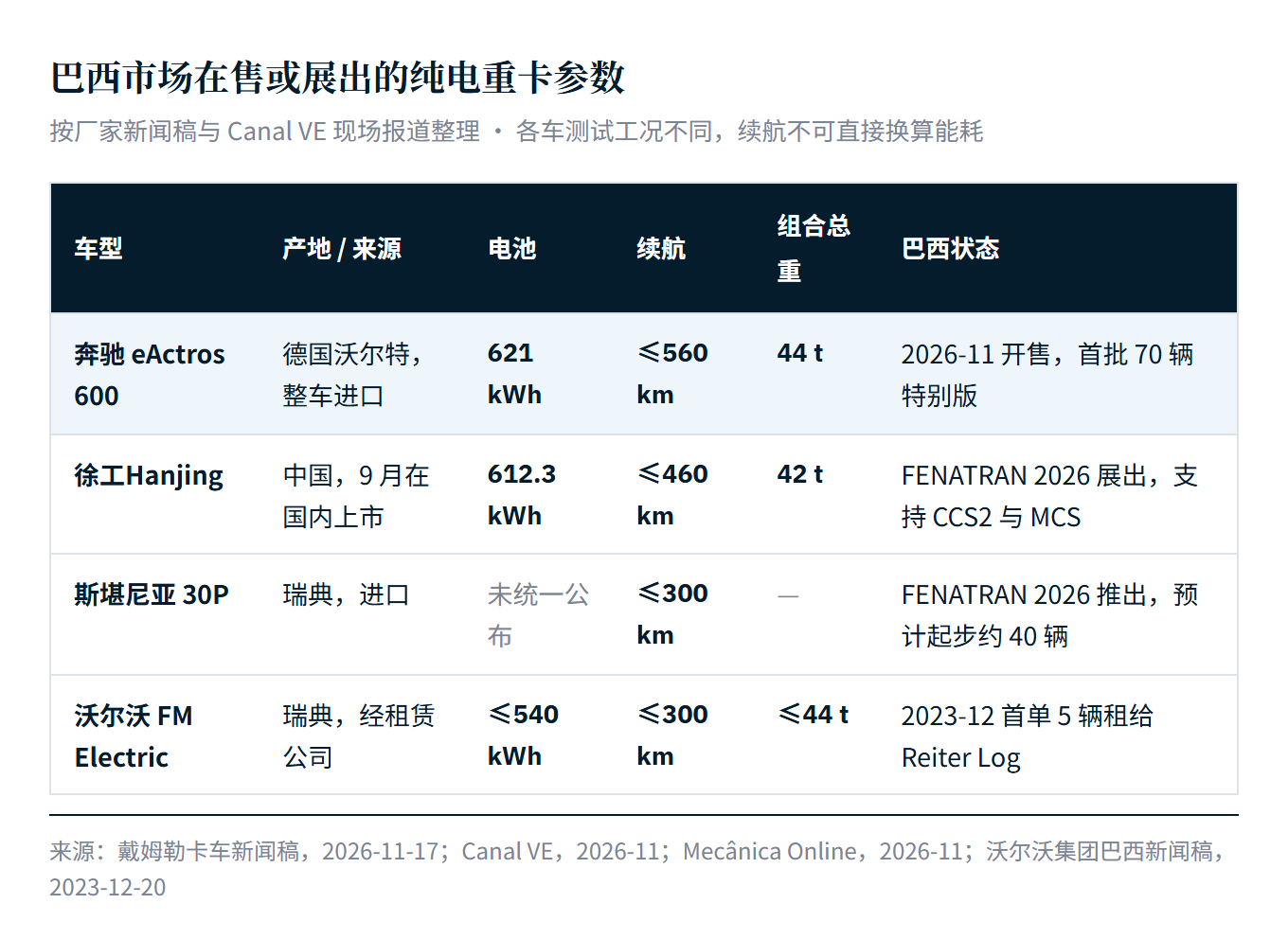
Daimler Truck announced on Nov 17 that the Mercedes-Benz eActros 600 had launched at the FENATRAN show in São Paulo. This year marks 70 years since Mercedes-Benz began production in Brazil, and the first 70 units are being sold as a special edition. Zetros and Unimog defense vehicles also made their Brazilian debut on the same stand. The eActros 600 electric heavy truck enters Brazil with trial runs in local fleets first, followed by small-batch sales of fully imported vehicles. Local production will be considered once volumes grow.
Pilot fleets first
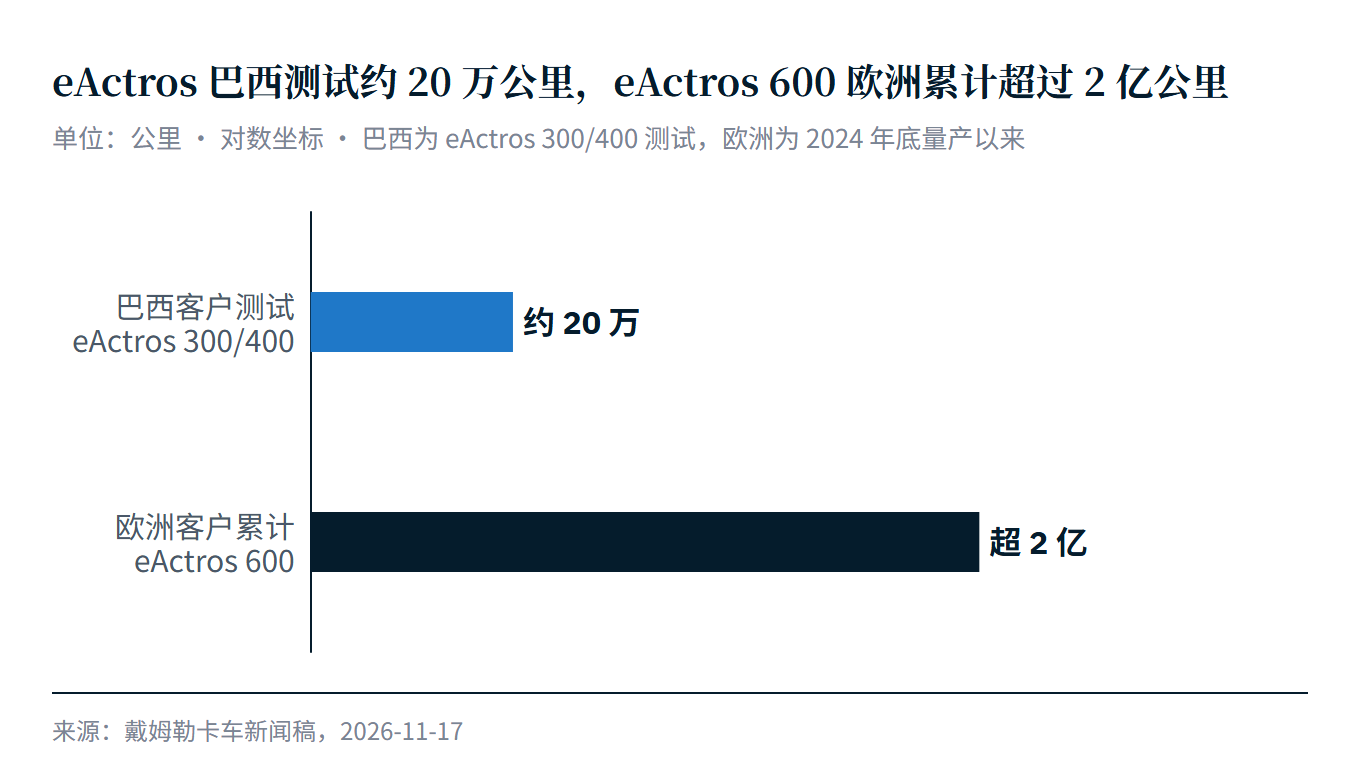
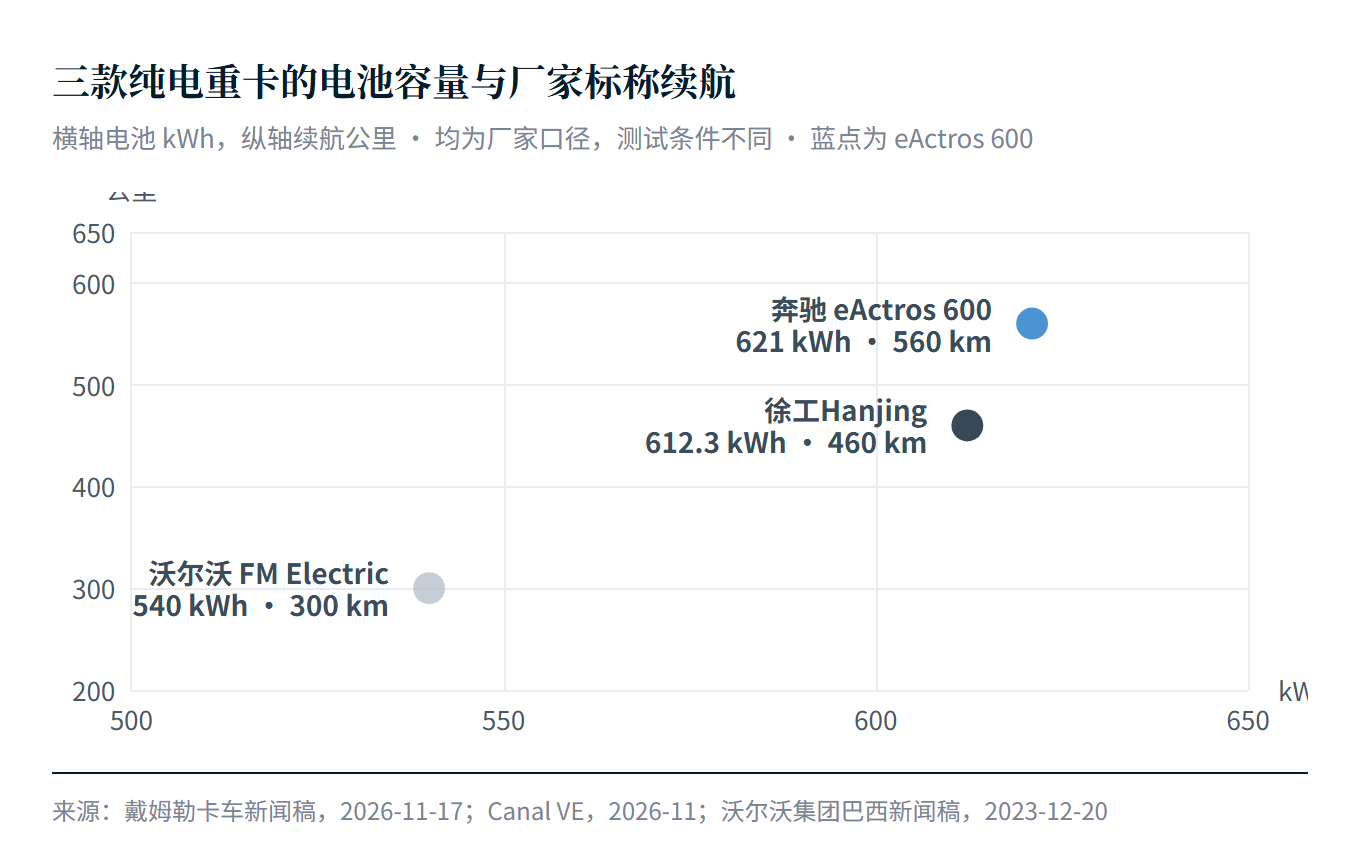
Last year, Mercedes-Benz Brazil tested the eActros 300 and 400 with 10 customer fleets, covering about 200,000 km in total. The eActros 600 has a 621 kWh battery and a range of up to 560 km in its most economical configuration at 44 tonnes gross combination weight. Since series production began in Europe at the end of 2024, customers have driven it more than 200 million km, 1,000 times the Brazil test mileage.
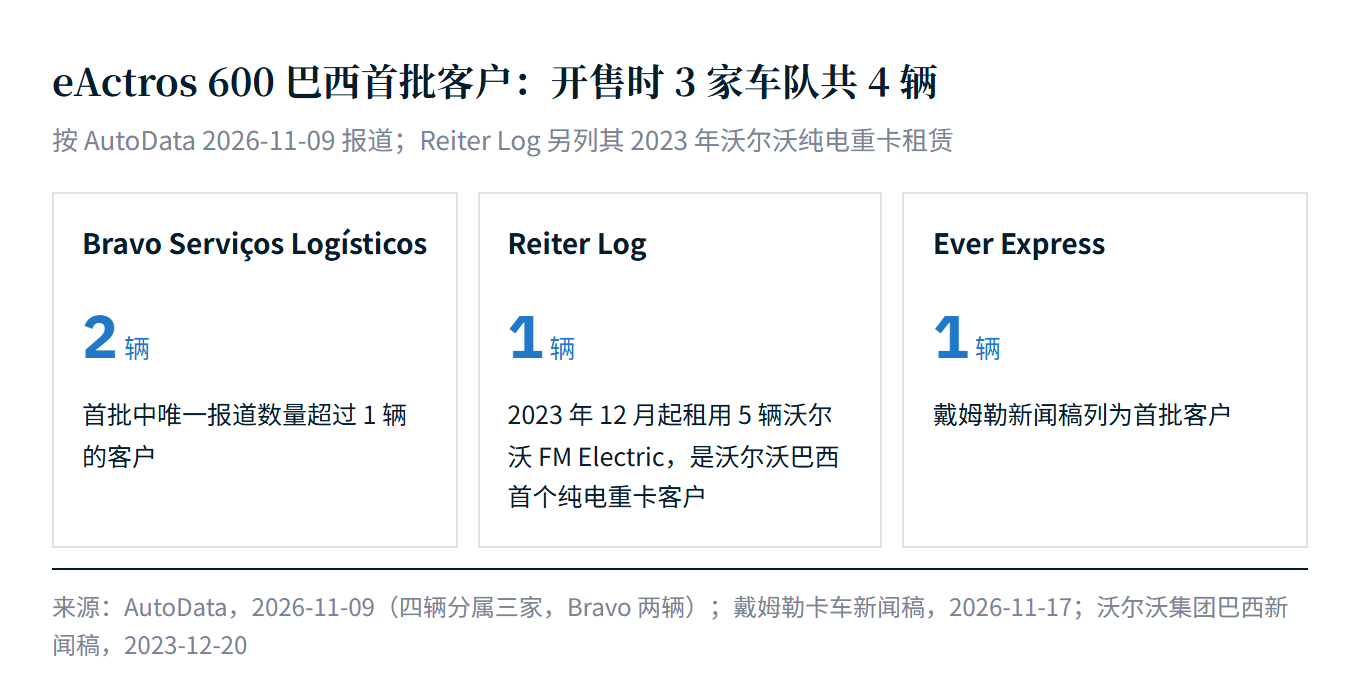
The first customers are Bravo Serviços Logísticos, Reiter Log and Ever Express. Reportedly, 4 units had been sold at launch, 2 of them to Bravo. In Dec 2023, Reiter Log leased 5 Volvo FM Electric trucks, Volvo's first BEV heavy truck deal in Brazil.
Early orders come from large fleets that have already used electric heavy trucks, and there are few such customers.
Import pricing and tariffs
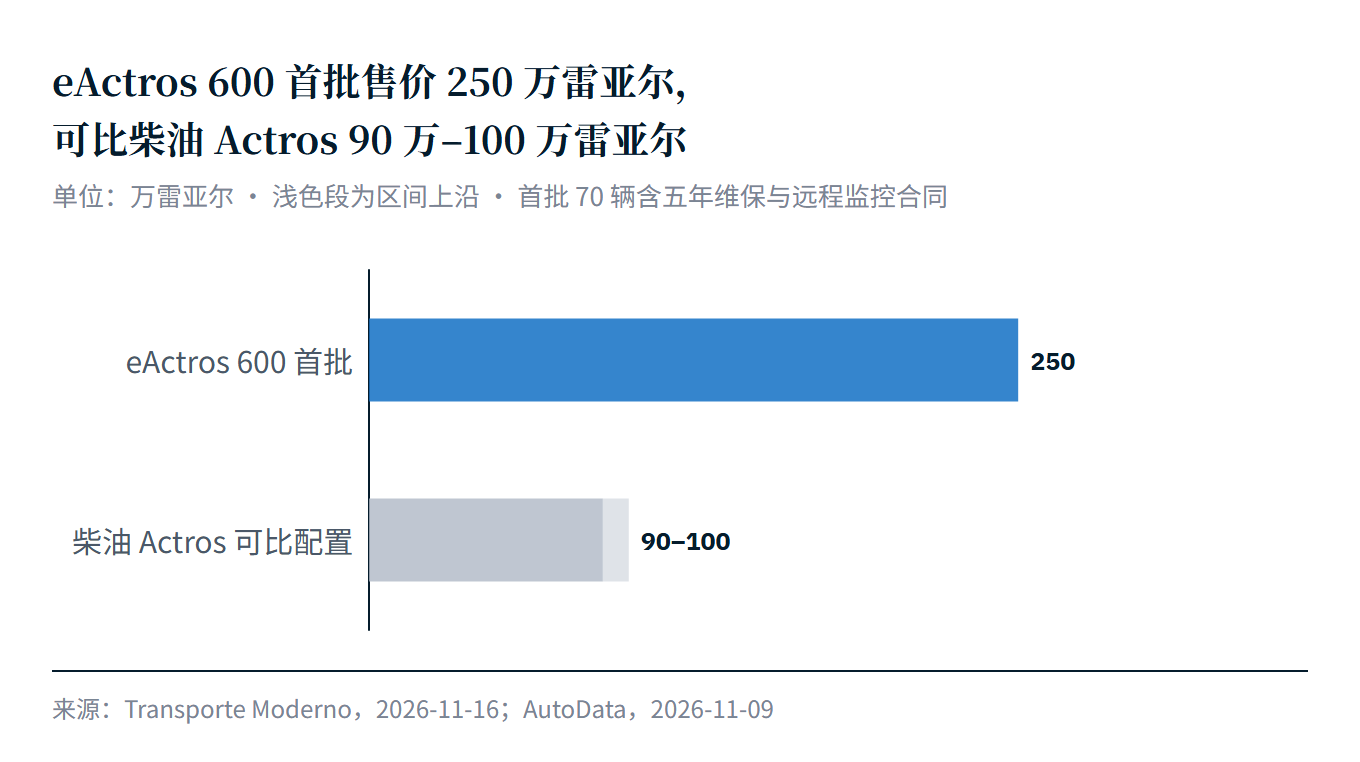
The eActros 600 is built at Mercedes-Benz's Wörth plant in Germany and shipped to Brazil as a complete vehicle. The first units sell for BRL 2.5 million, against about BRL 0.9–1 million for a diesel Actros with comparable specifications. That makes the electric version 2.5 to 2.8 times as expensive, and it is also 3 to 4 tonnes heavier. Mercedes-Benz says payback comes more easily for trucks running more than 10,000 km a month with favourable electricity prices.
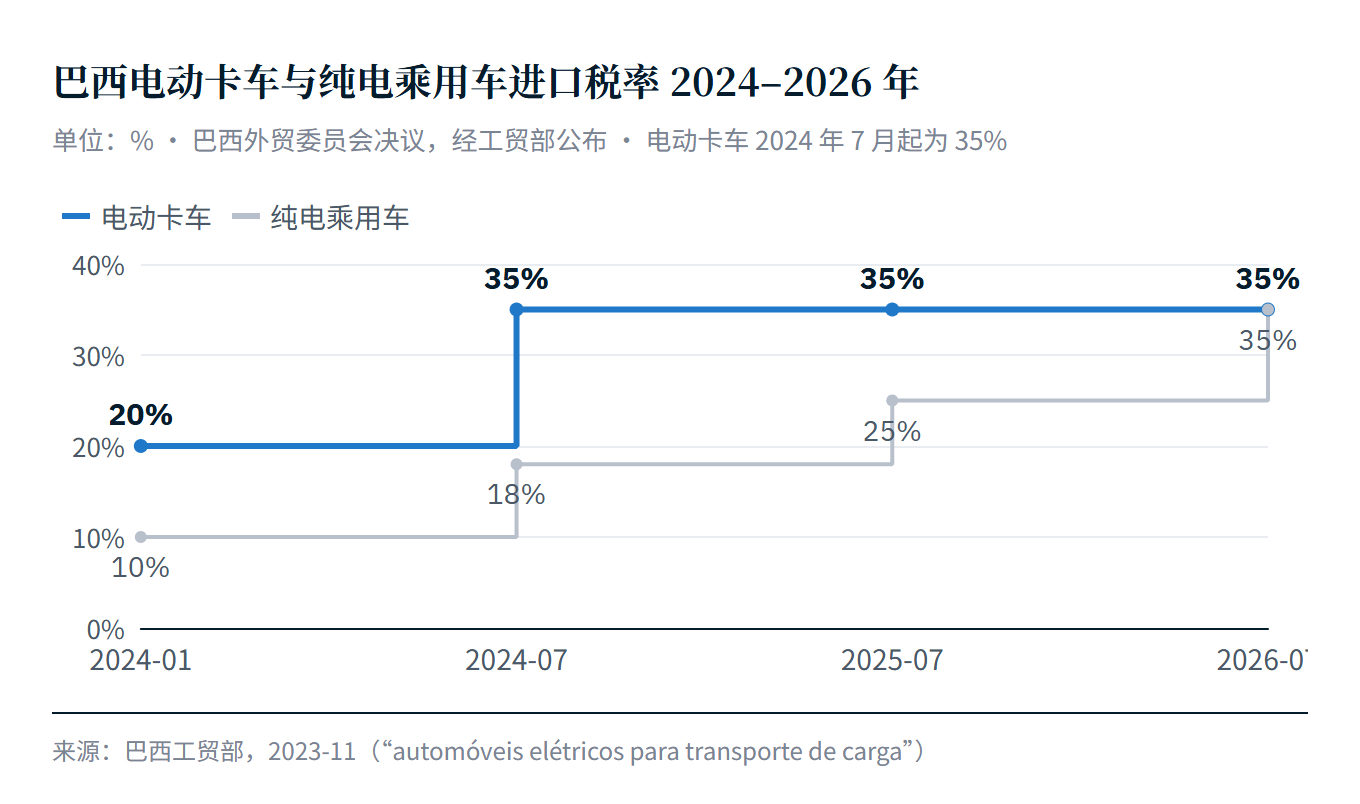
Brazil's import duty on electric trucks rose to 35% in Jul 2024, and the duty-free quota expired at the end of month 6 this year. Mercedes-Benz Brazil said local production will be decided once there is sales volume, and gave no timetable.
Until local assembly begins, fleets bear import duties and the price gap, so customers will be concentrated on high-mileage fixed routes with their own charging.
Head-to-head competitor comparison
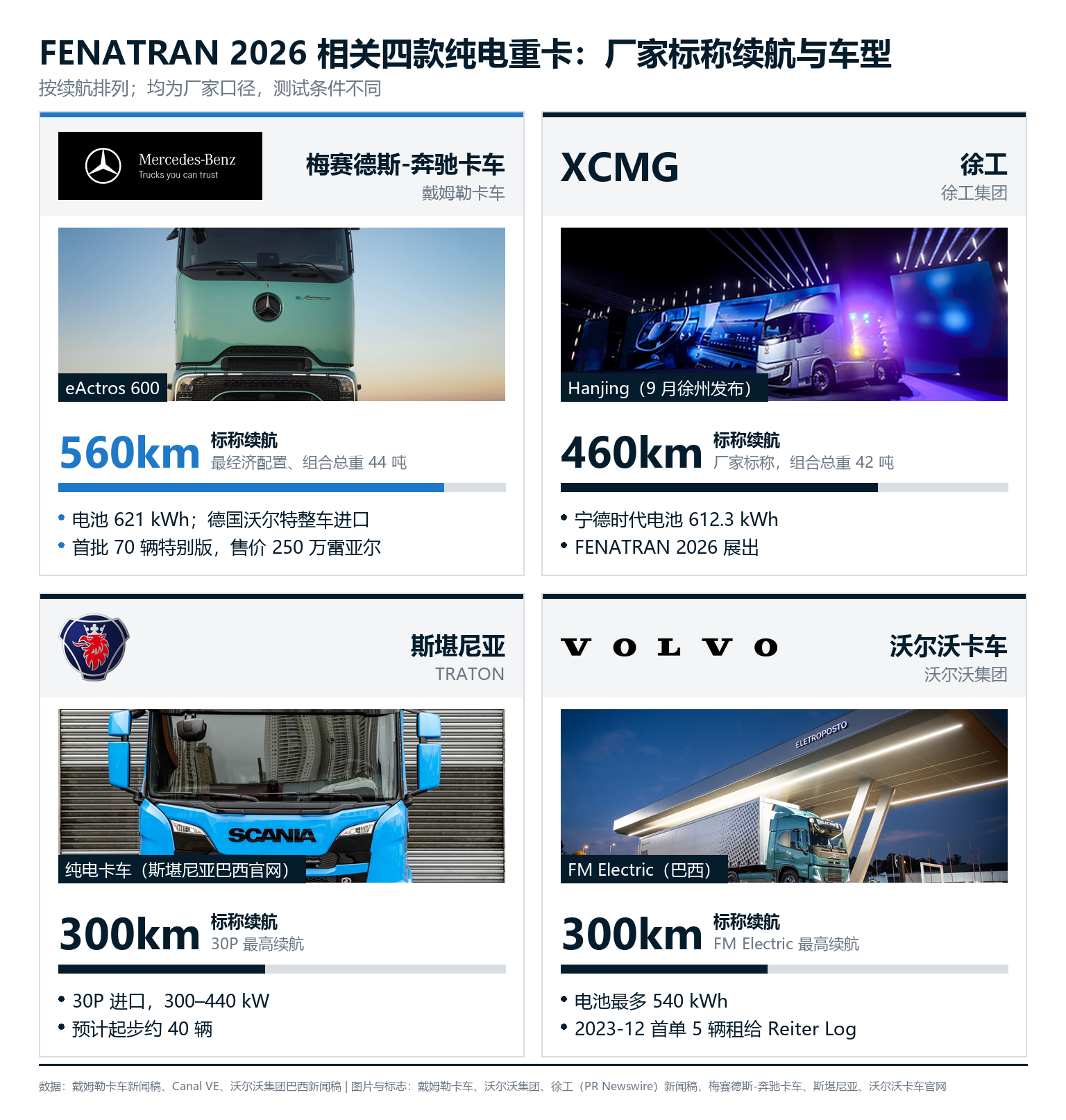
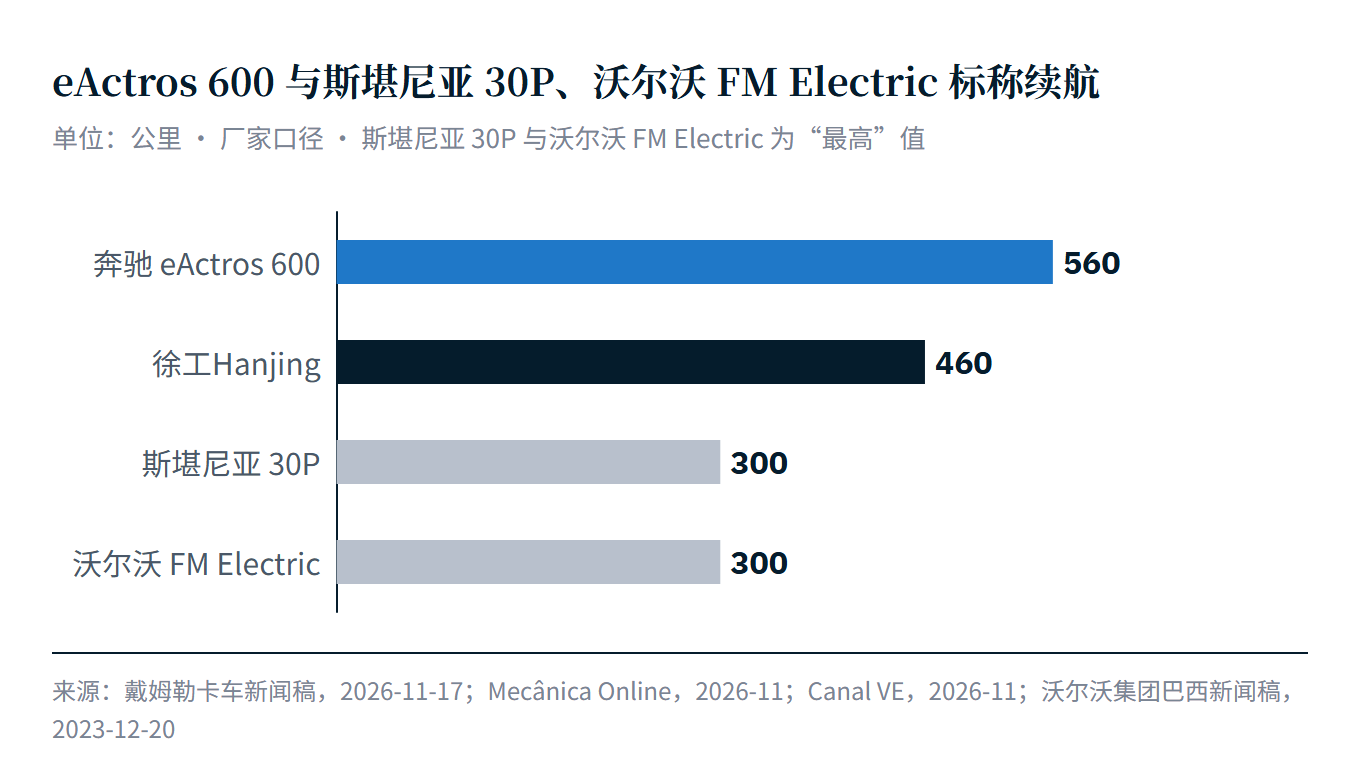
13 truck makers exhibited at the show, 6 of them from China. Scania launched the imported battery-electric 30P with a range of up to 300 km, with initial volumes expected at around 40 units; the XCMG Hanjing tractor uses a 612.3 kWh CATL battery and has a 460 km range. The Volvo FM Electric offers up to 540 kWh and 300 km of range; the eActros 600 has about 1.15 times its battery capacity and about 1.9 times its range.
Battery capacity is now close to that of Chinese models; Mercedes-Benz differentiates itself more through range and through a service package bundling charging planning, cost calculations and maintenance.
Mercedes-Benz's focus in 2027 is selling the first batch of 70 units and putting them into service. Operating data from this batch will determine whether the model can be assembled locally in Brazil.
Data sources: Daimler Truck press releases, AutoData, Transporte Moderno, Canal VE, Volvo Group, Brazilian Ministry of Development, Industry and Trade
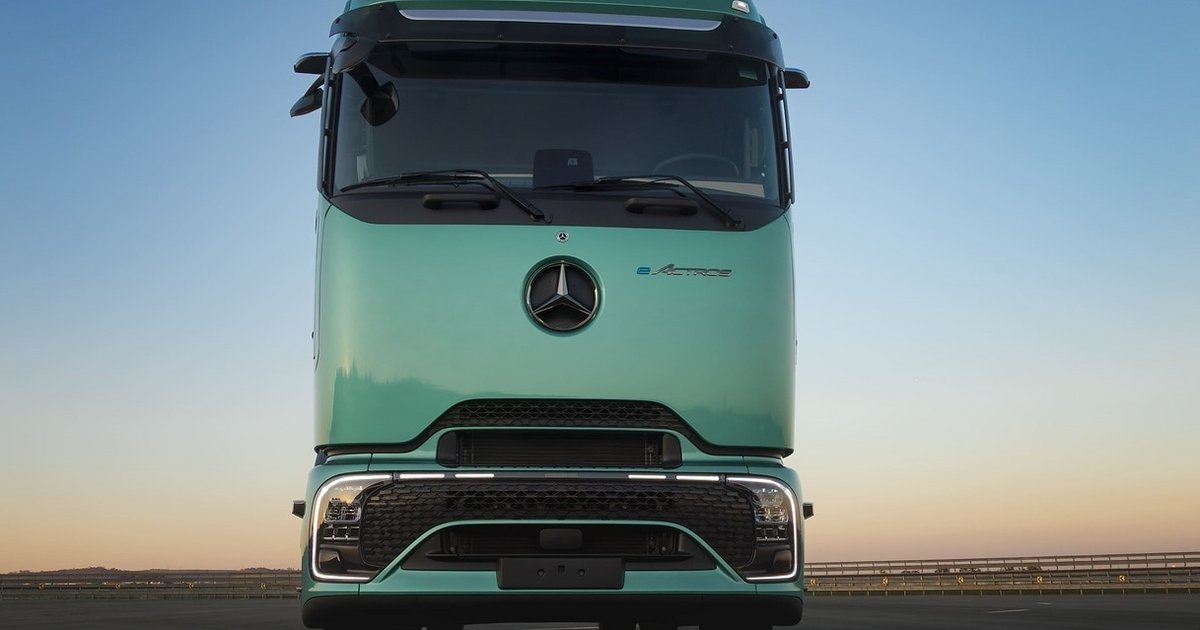
Image: Daimler Truck.
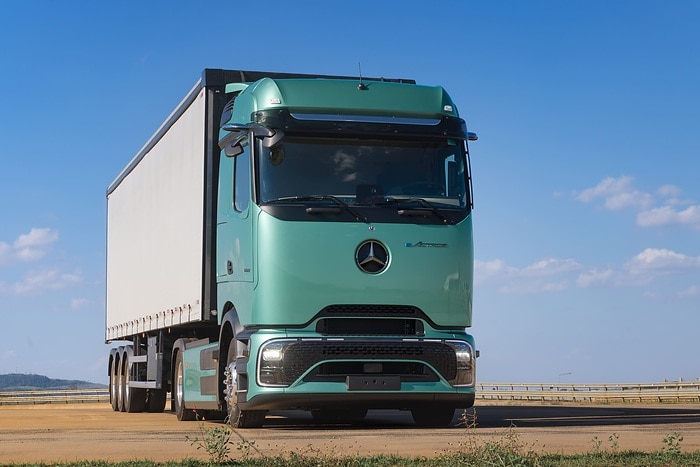
Image: Daimler Truck.
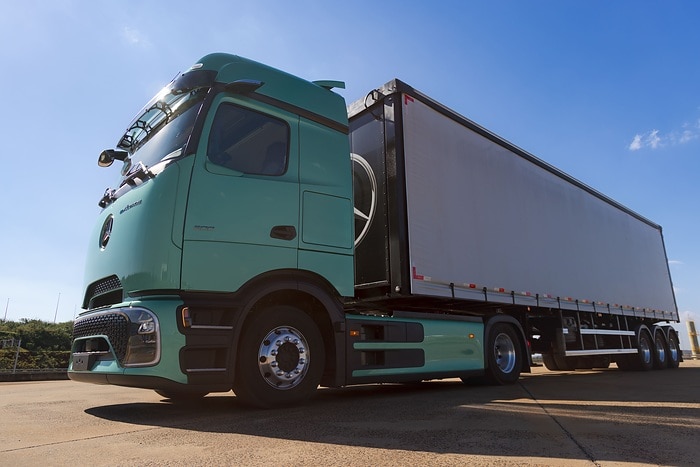
Image: Daimler Truck.
Source: Chart by AutoMusic based on the public sources listed in the article; first published on the AutoMusic WeChat account.