Frankfurt's zero-emission buses top 100, with diesel buses as a stopgap first
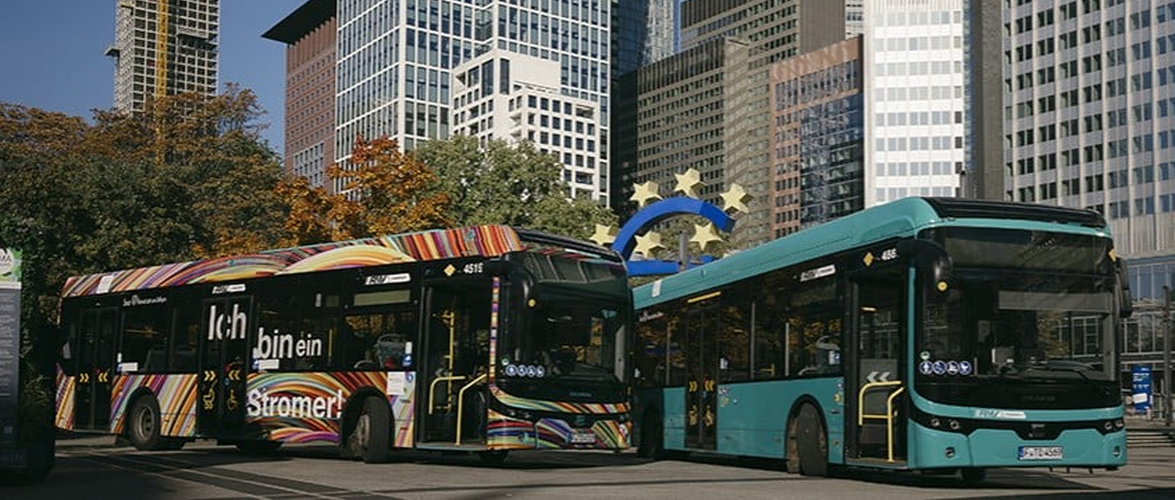
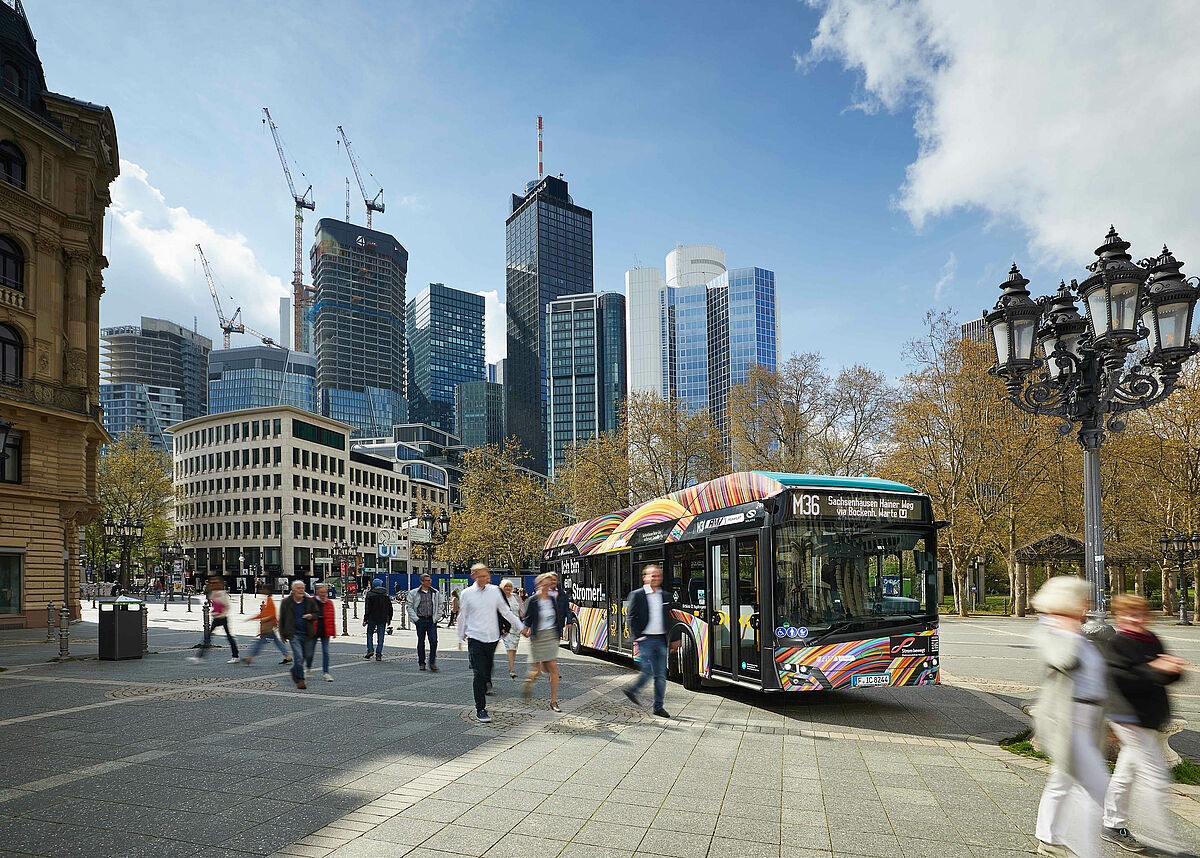
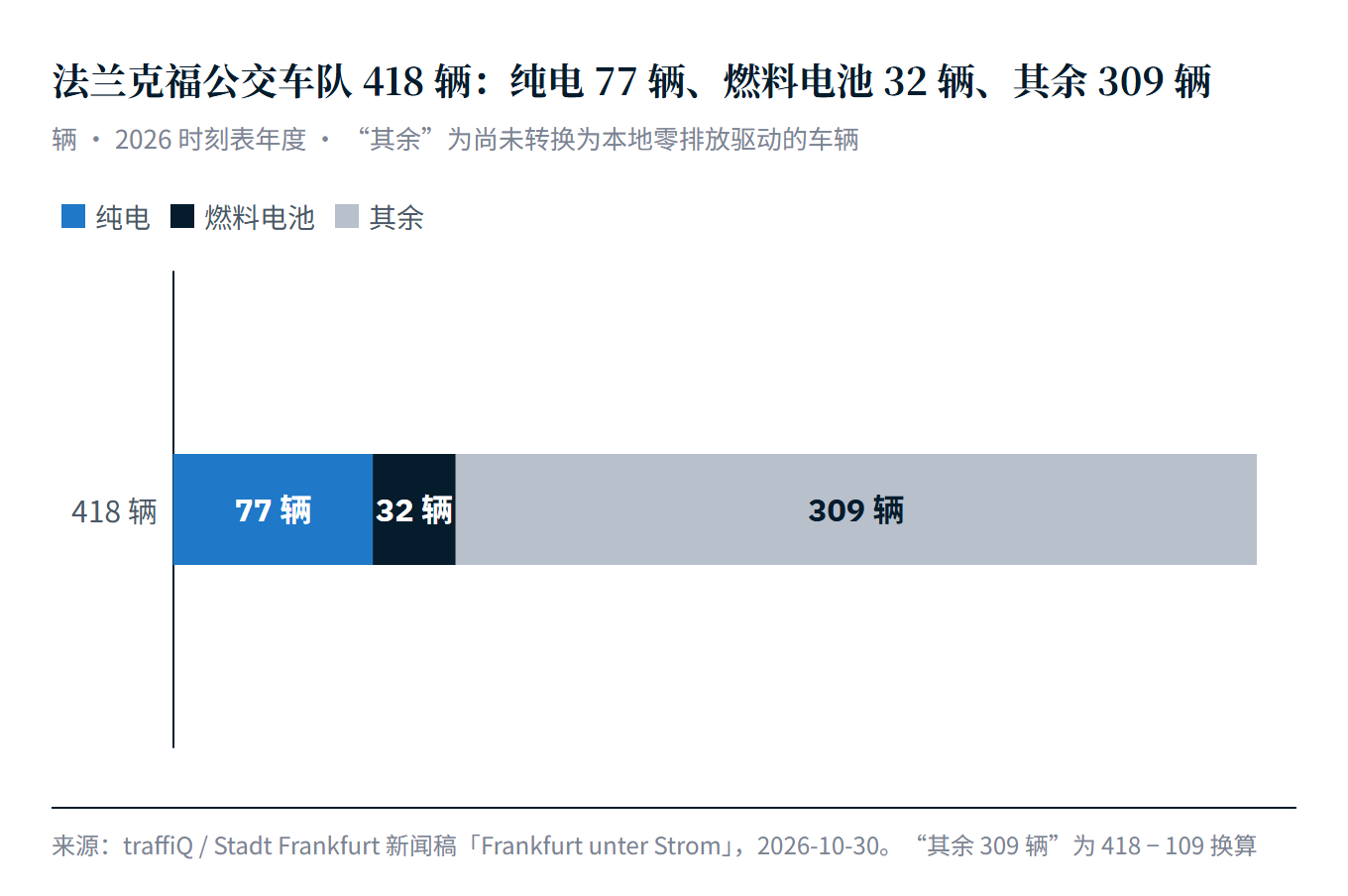
On Oct 30, the Frankfurt city government and public transport authority traffiQ reported that 109 of the city's 418 buses now use locally zero-emission drives, 77 battery-electric and 32 fuel-cell, a 26% share. The report also noted that municipal operator ICB has just put 52 new diesel buses into service because the new depot where electric buses can park and charge has not yet been built. How fast Frankfurt electrifies from here depends mainly on the timelines for depot construction and grid connection.
Current fleet
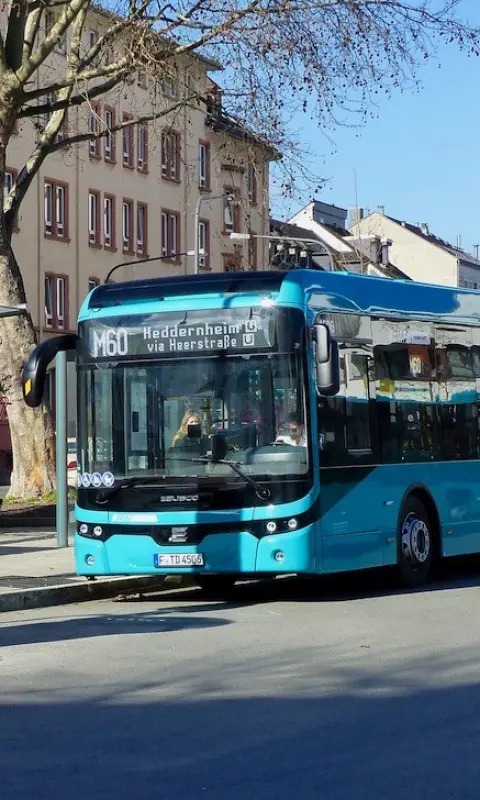
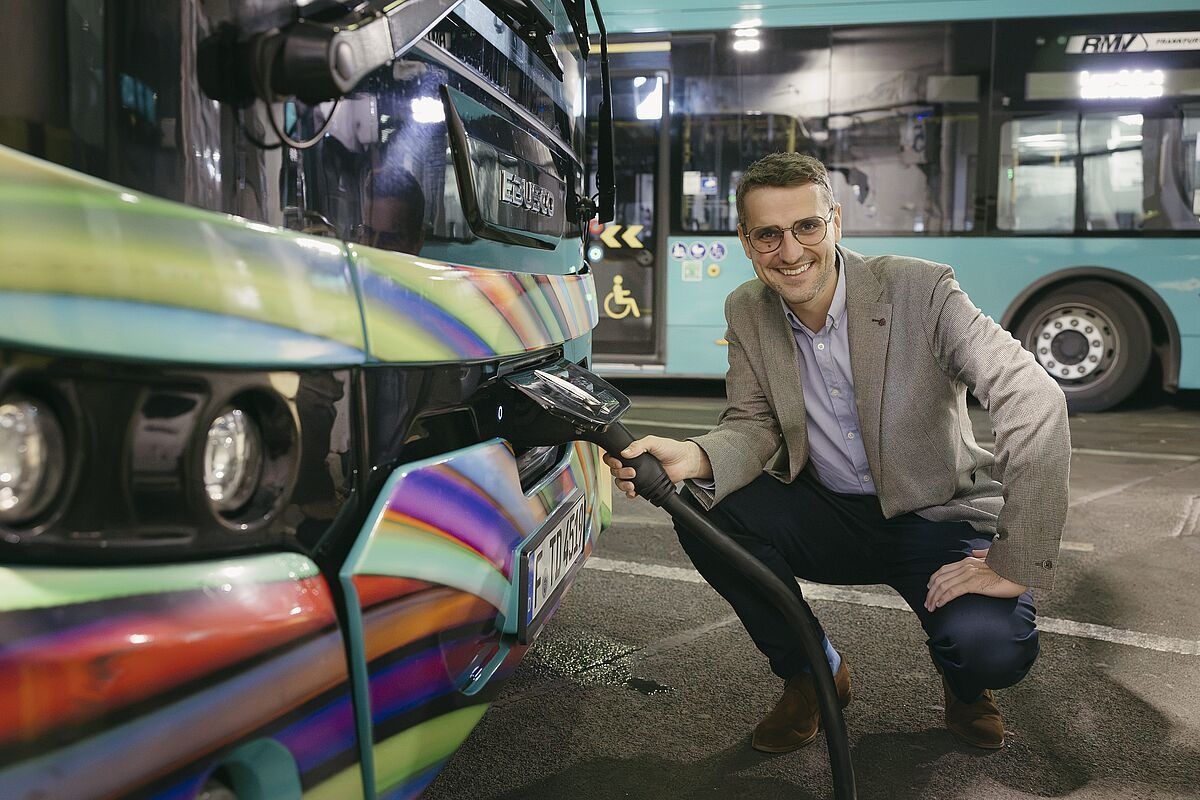
The 100th milestone was passed by 9 new Ebusco battery-electric buses put into service by Transdev Rhein-Main on routes 56 and 71, charging at the Heddernheim waste-to-energy CHP plant, where renewables have recently made up about 47% of power output.
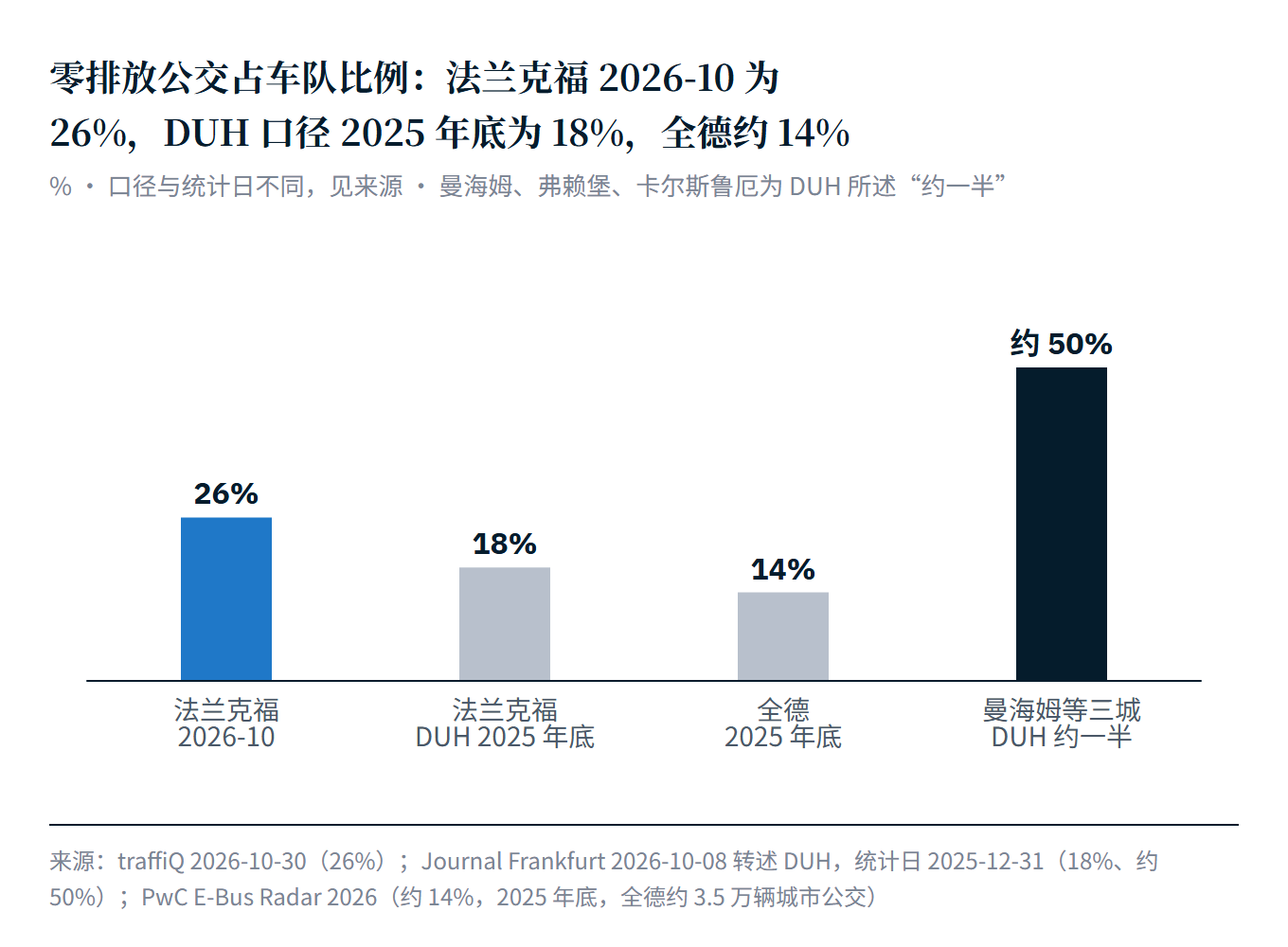
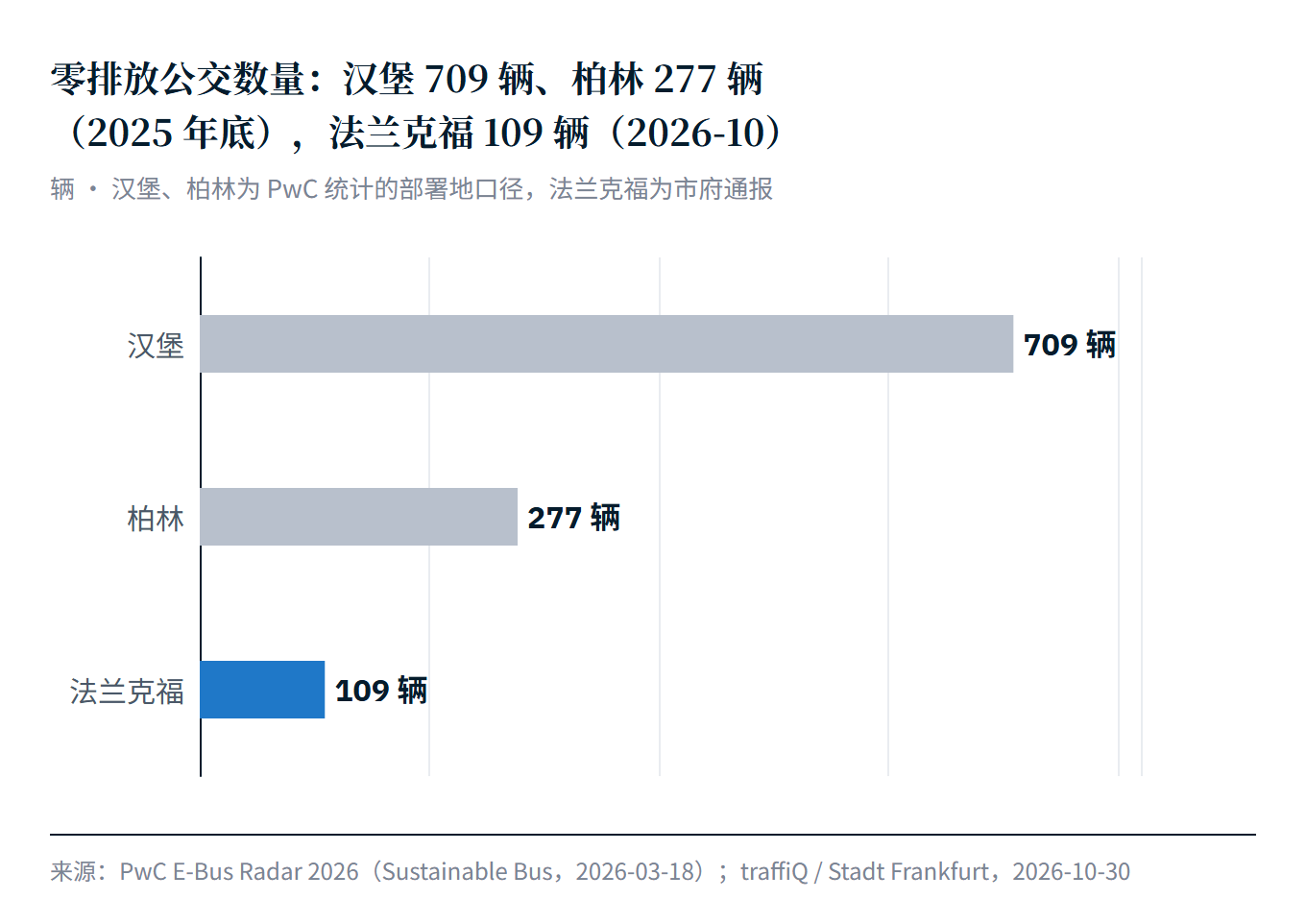
Compared with other cities, Frankfurt ranks high in absolute numbers but mid-table in proportion. According to Deutsche Umwelthilfe (DUH), based on end-2025 figures, electric vehicles make up 18% of Frankfurt's current bus fleet, ranking 23 among 40 major cities; in Mannheim, Freiburg and Karlsruhe, about half of buses are already electric. According to the statistics, Hamburg alone has 709 zero-emission buses, out of 4752 nationwide, about 14% of urban buses.
Frankfurt's share is above the national average but still trails the cities with the highest EV shares.
Diesel transition
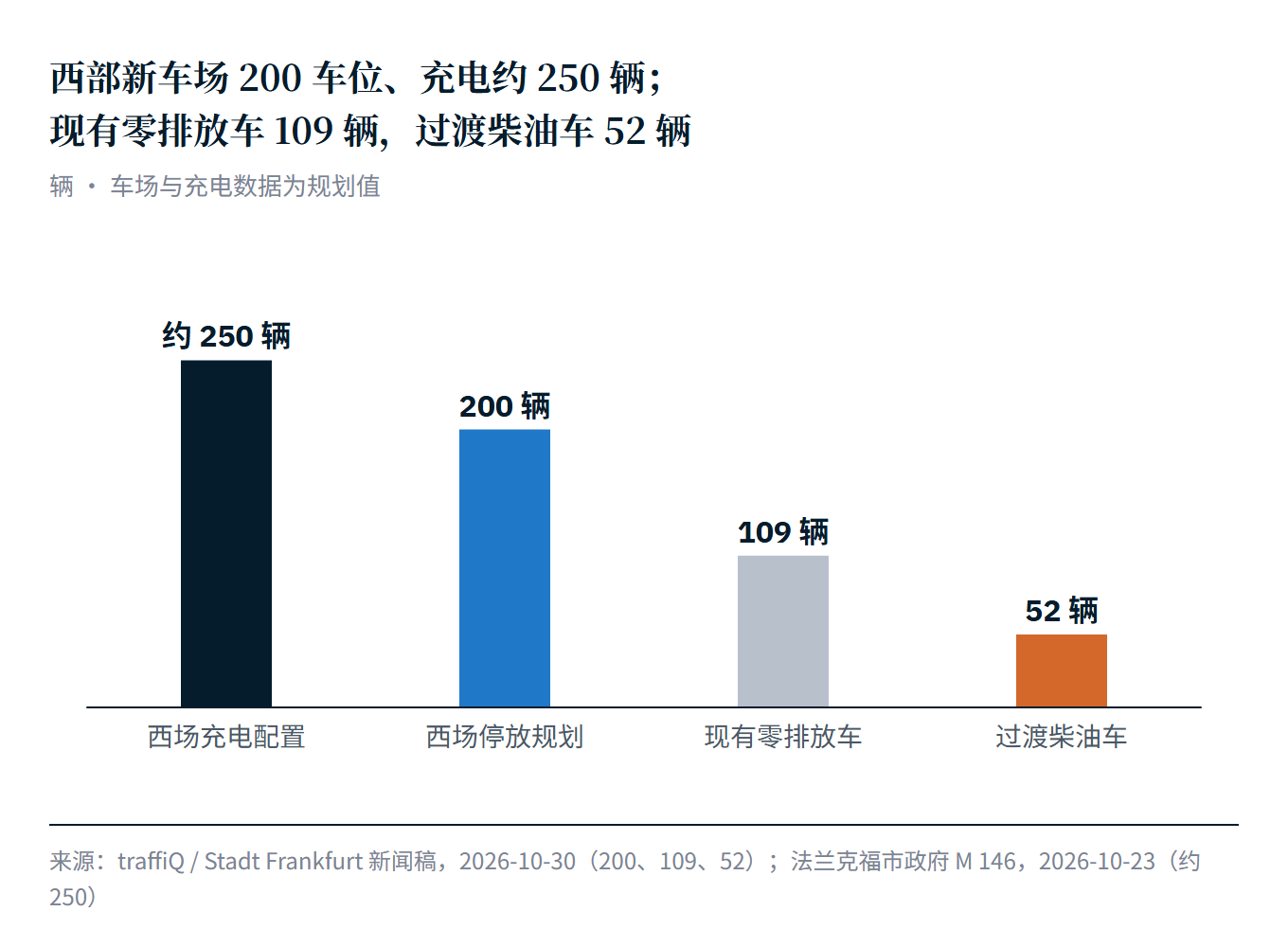
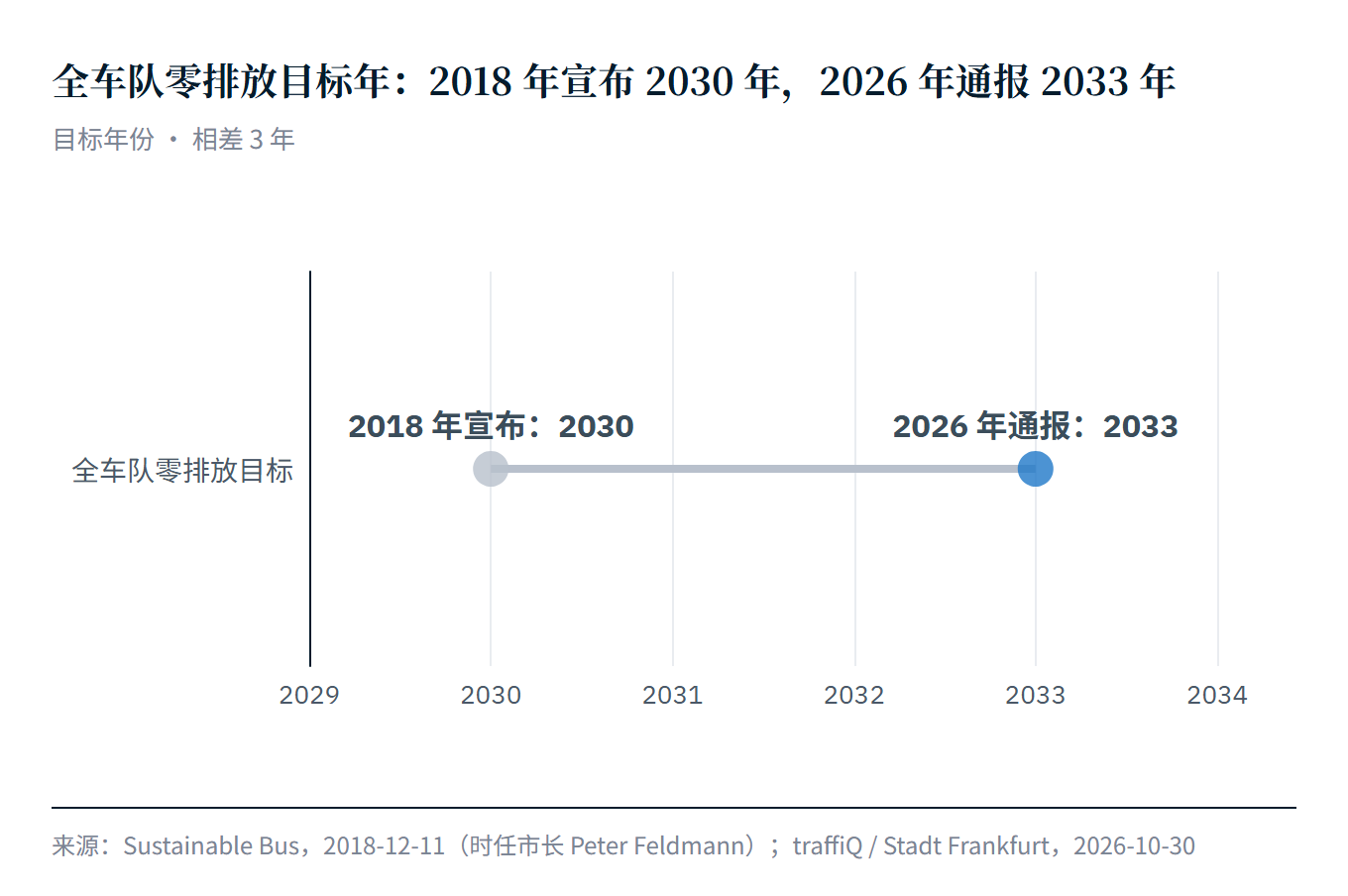
ICB plans to build a western electric bus depot on Lorscher Straße in Rödelheim to replace the old Römerhof depot, with room for 200 battery and hydrogen buses. A document the city government submitted to the city council on Oct 23 states that the new depot's charging infrastructure is sized for about 250 electric buses, and that 4 sets of 10 kV cables must be laid through an existing culvert under the railway. Until the new depot opens, ICB will bridge the gap with 52 diesel buses, roughly half the size of its current zero-emission fleet. When the first 5 Solaris electric buses entered service in 2018, the then mayor announced a fully zero-emission fleet by 2030; the target is now 2033, 3 years later.
For bus operators, the time needed to build depots and secure grid connections determines when they can stop buying diesel buses.
Remaining gap
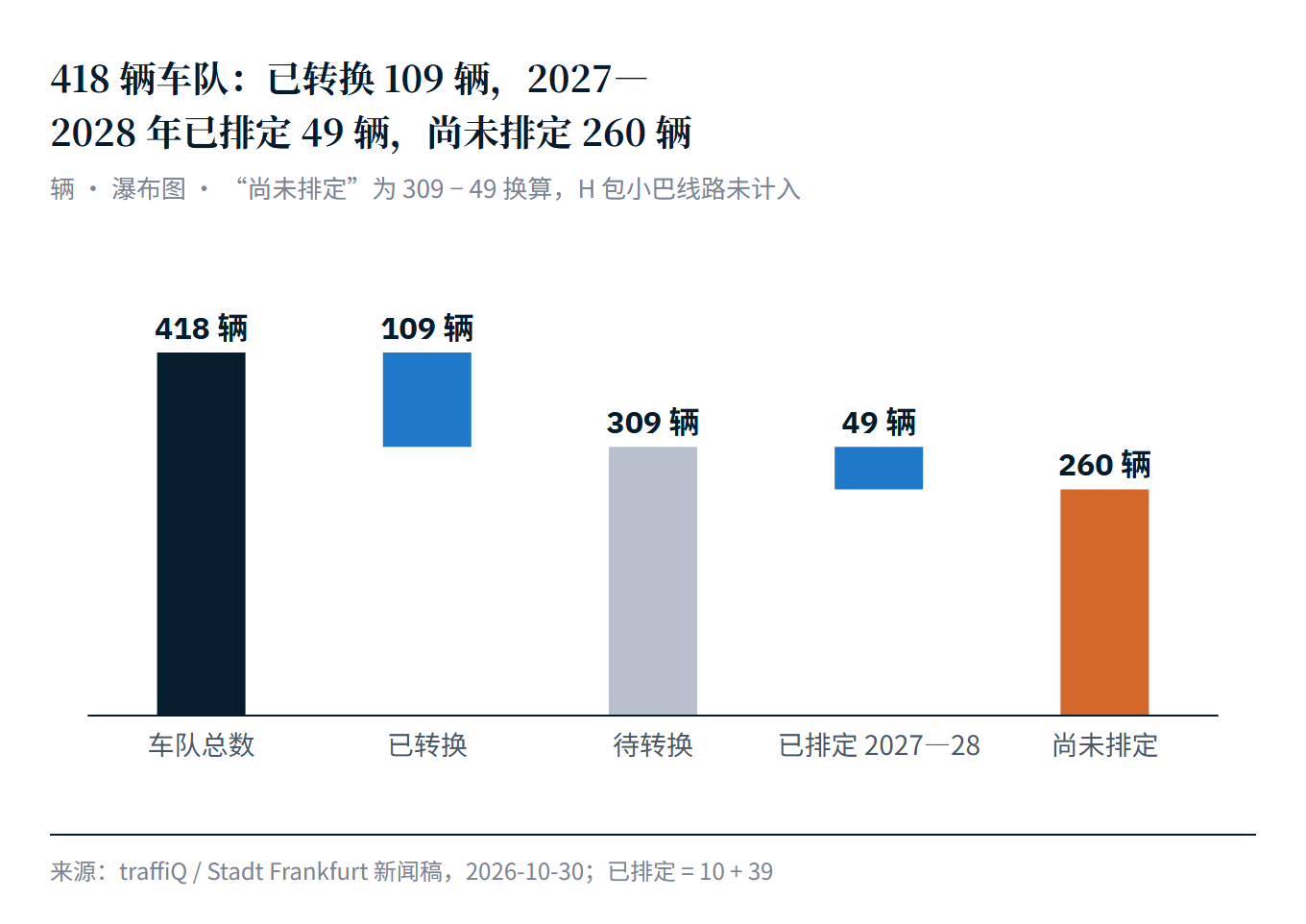
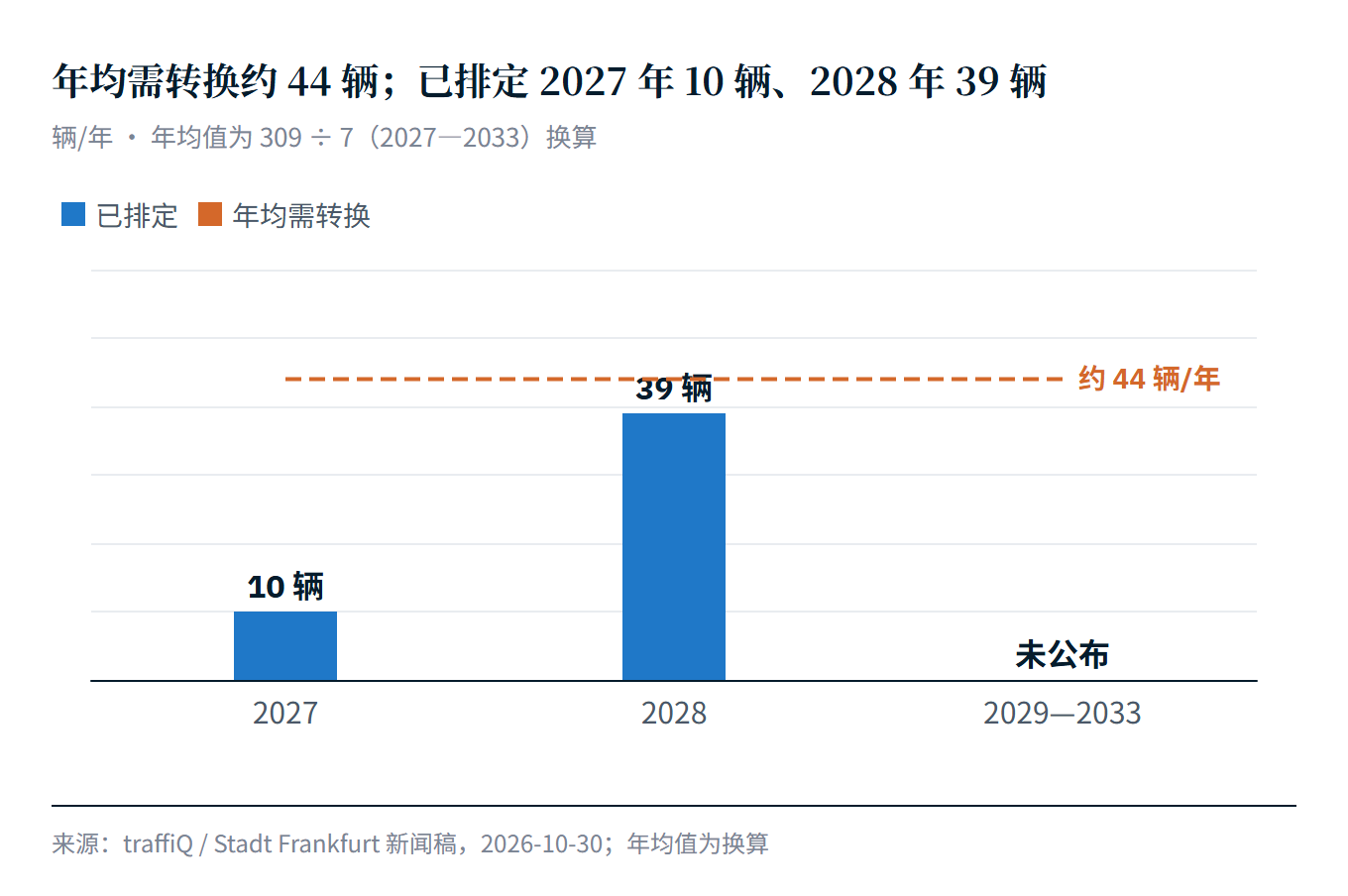
Of the 418 vehicles, 309 still need to be converted; spread over the 7 years from 2027 to 2033, that is about 44 per year. So far only 49 are scheduled: 10 additional vehicles in West Package B from 2027 and 39 purchased in the East in 2028.
traffiQ's managing director says electric bus operating costs are already about 40% lower than comparable diesel buses. Nationwide German figures put a 12-metre battery-electric bus at about €580,000 and a diesel bus at about €310,000, making the BEV roughly €270,000 more expensive per unit. The city is sticking with both battery and hydrogen fuel cell routes, arguing it should not depend on a single drivetrain; in August this year, Potsdam's bus operator cancelled an order for 23 electric buses from Ebusco over repeated delays.
Annual procurement after 2029 must be well above the already scheduled pace; whether it materialises depends on when the western depot opens and on supplier deliveries.
For bus and charging companies bidding for city bus contracts in Germany, Frankfurt's additional demand is concentrated in two new depots from 2028 onwards; depot construction progress will signal opportunities earlier than bus prices.
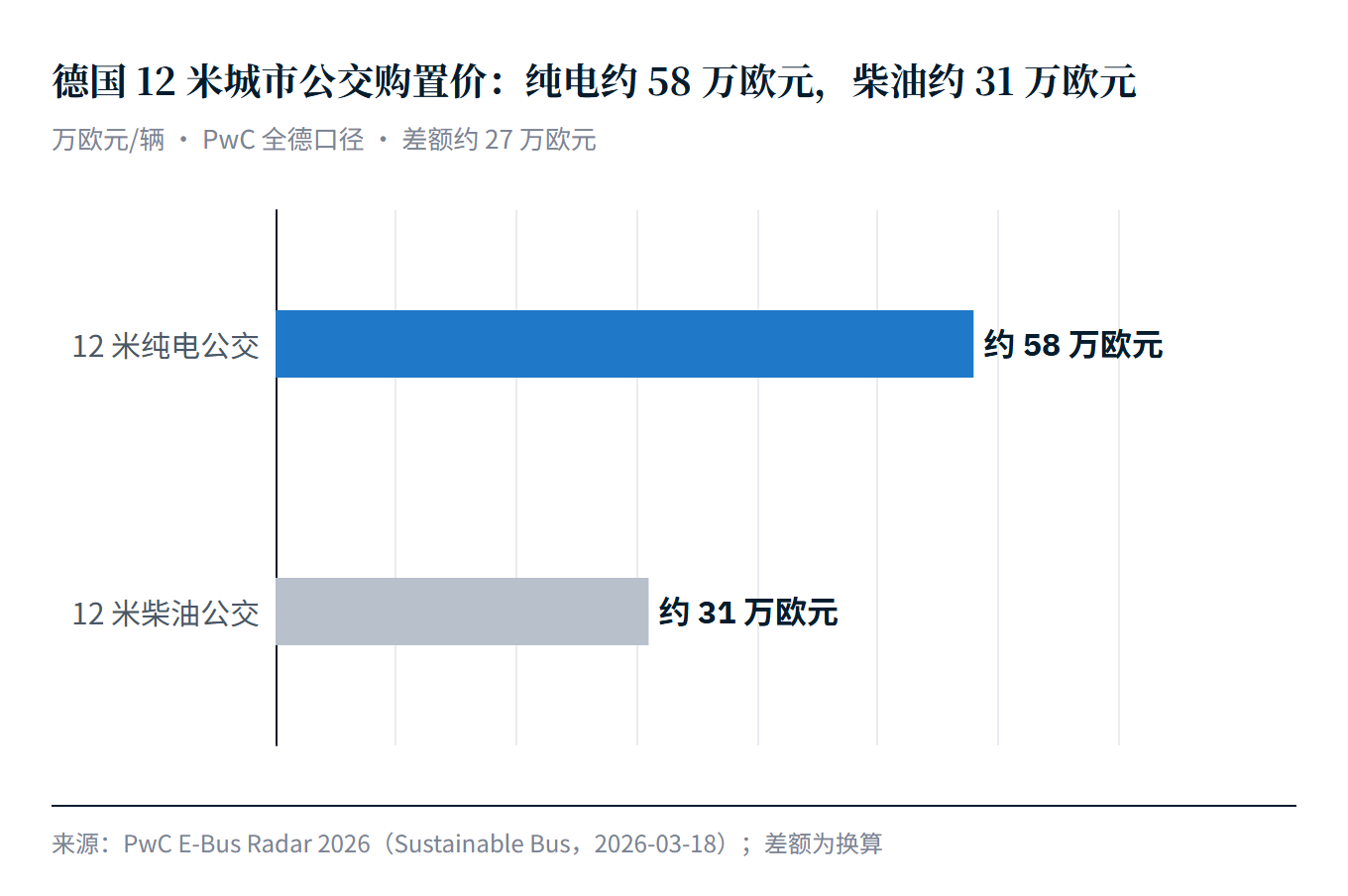
Source: Chart by AutoMusic based on the public sources listed in the article; first published on the AutoMusic WeChat account.