Volkswagen's commercial vehicle group Traton speaks out: EU heavy truck emissions targets are not impossible, but the whole system is failing
Reproduction or excerpting without permission is strictly prohibited. Questions and comments are welcome. Follow us for ongoing analysis of the latest developments in China and abroad. After the European Commission unveiled its new "…
**Reproduction or excerpting without permission is strictly prohibited.** Questions and comments are welcome. Follow us for ongoing analysis of the latest developments in China and abroad.
After the European Commission unveiled its new Automotive Package at year-end and adjusted the CO₂ reduction rules, clear divisions emerged within the European auto industry.
The passenger car camp pushed back hard: the VDA president called it a "fatal compromise" and BMW's CEO publicly warned of a "combustion ban by the back door", with corporate fleets set to be hit first. Yet commercial vehicle and heavy-truck OEMs reacted with unusual calm. The response from Volkswagen's commercial vehicle group Traton was especially representative.
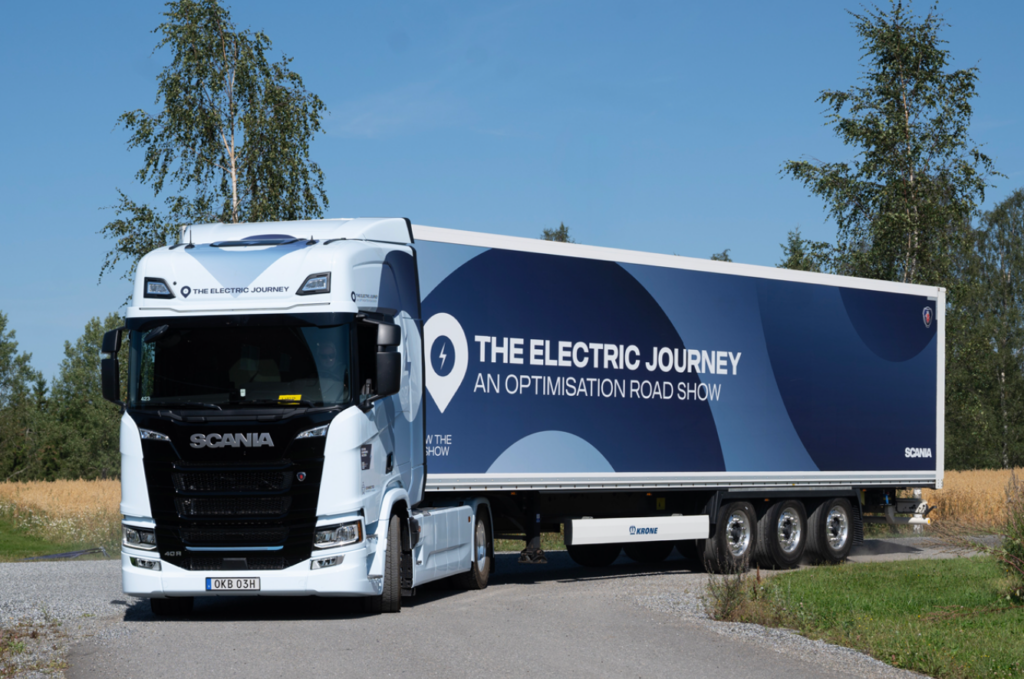
Traton Group's stance: the target is fine, the mechanism is flawed
In an interview with German business outlet Handelsblatt, the TRATON CEO gave a blunt assessment: "We support the EU's climate targets, but the current system doesn't work." Yet TRATON itself has in fact already invested heavily in electrification.

ACEA position
As CEO of TRATON Group and chair of the commercial vehicle board at ACEA, he is directly involved in policy dialogue with the European Commission, Parliament and member states. What he stresses repeatedly is that technology and products are no longer the bottleneck, and capital has already come in at scale. TRATON Group plans to invest more than EUR 2 billion in electrification alone by 2030. The problem is that current investment cannot generate meaningful returns. Europe's commercial vehicle groups carry billions of euros of electric projects on their balance sheets that are not yet profitable, which neither satisfies shareholders nor makes engineers feel valued. So under the current penalty and compliance regime, every electric truck sold brings manufacturers only upside and no downside.
The gap between ambition and reality
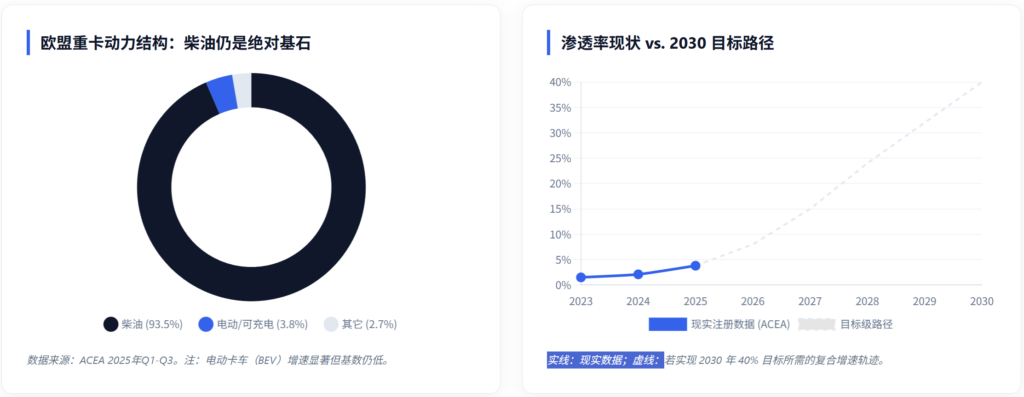
According to ACEA, electric heavy trucks still accounted for less than 4% of new registrations in Europe in the first 9 months of 2025. To meet the EU's 2030 emissions reduction pathway, the market should ideally look like
- Electric heavy trucks would need a market share of nearly 40%
- Nearly tenfold growth within five years
Under current market and economic conditions, such a target is out of reach even for passenger cars. For heavy trucks, it is an impossible task.
Why did the EU relax its interim targets?
Under the new rules, the EU has made several key changes for the heavy truck sector:
- Mandatory interim targets scrapped
- Allows emission reductions from early sales to be converted into CO₂ credits
- Relaxes the previously very rigid linear reduction pathway
The adjustment is the first time the EU has openly acknowledged a reality: a one-size-fits-all approach to emissions cuts is impossible.
Heavy trucks are not "consumer goods"
Trucks are not consumer goods but capital goods. For logistics companies and fleets, decisions are highly rational and revolve almost entirely around four variables: purchase cost, energy prices, vehicle utilisation and availability of charging infrastructure. If the TCO case does not stack up, no orders will come, however grand the policy slogans.
The question of regulatory fairness
In Europe's current commercial vehicle system, manufacturers do not control the build-out of charging infrastructure, nor do they set electricity price structures, and purchase subsidies vary widely across member states. Yet almost all compliance pressure and fines fall on manufacturers. This is neither fair nor sustainable.
Germany's current proposal to exempt electric heavy trucks from motorway tolls until mid-2031 is widely endorsed and directly improves TCO. Measures of this kind are more effective than mandatory quotas and should be implemented uniformly at EU level rather than in a fragmented way.
Heavy-truck electrification is a test of governance capacity
Electrifying heavy trucks is a systems undertaking. The technology and products are ready and the capital has been committed; whether the market takes off depends on whether the policy framework matches reality. If infrastructure, energy prices and incentives cannot form a closed loop, even the most ambitious emissions targets will simply become a costly system of penalties.
**Reproduction or excerpting without permission is strictly prohibited.** Questions and comments are welcome. Follow us for ongoing analysis of the latest developments in China and abroad.